NorgesGruppen, connecting 50,000 Employees Across 18 Brands.
Year
:
2023
Company
:
NorgesGruppen
Project
:
Internal Communication Platform
Team
:
1 Designer, 2 Product Managers, 1 Solution Engineer, 2 Developers
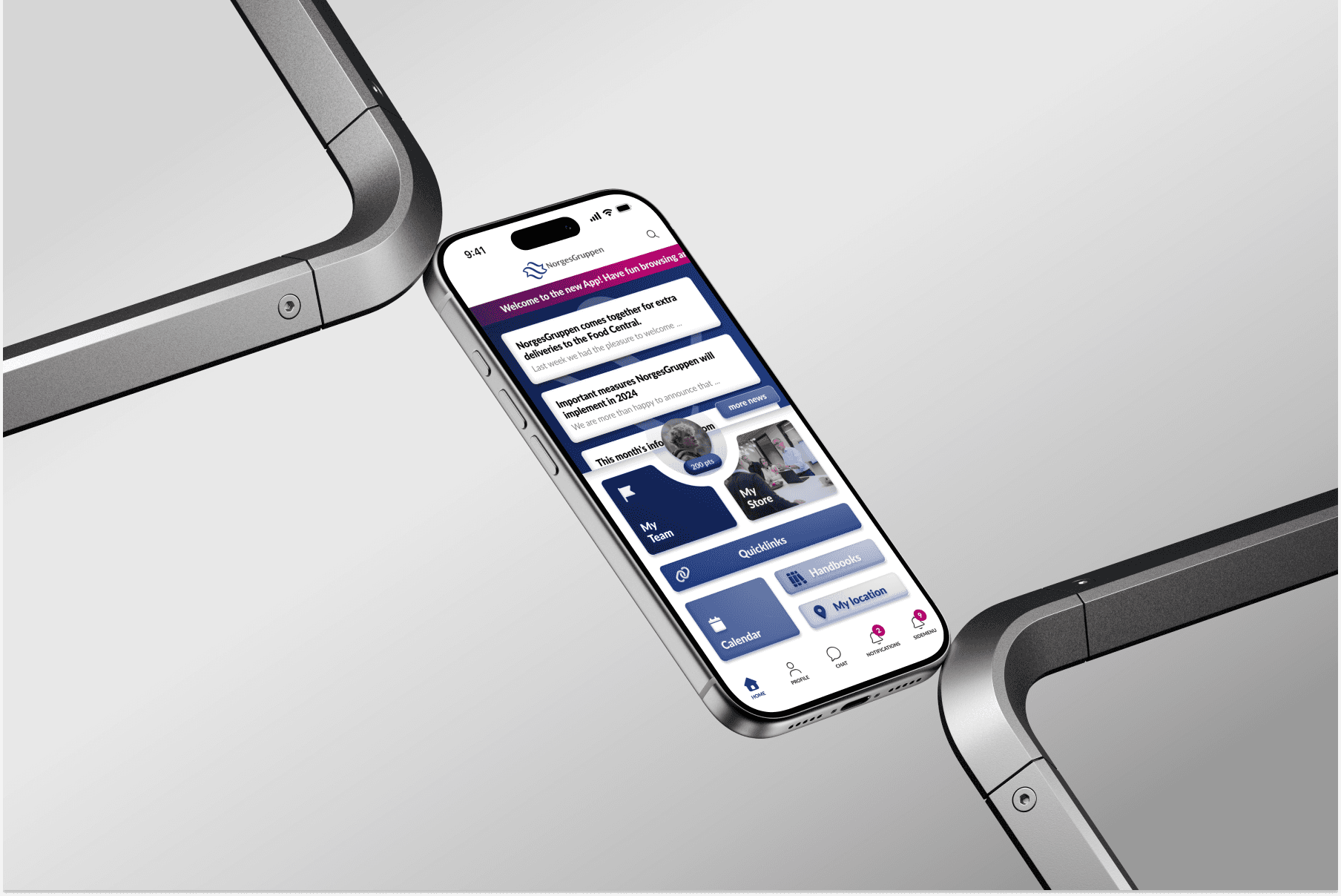
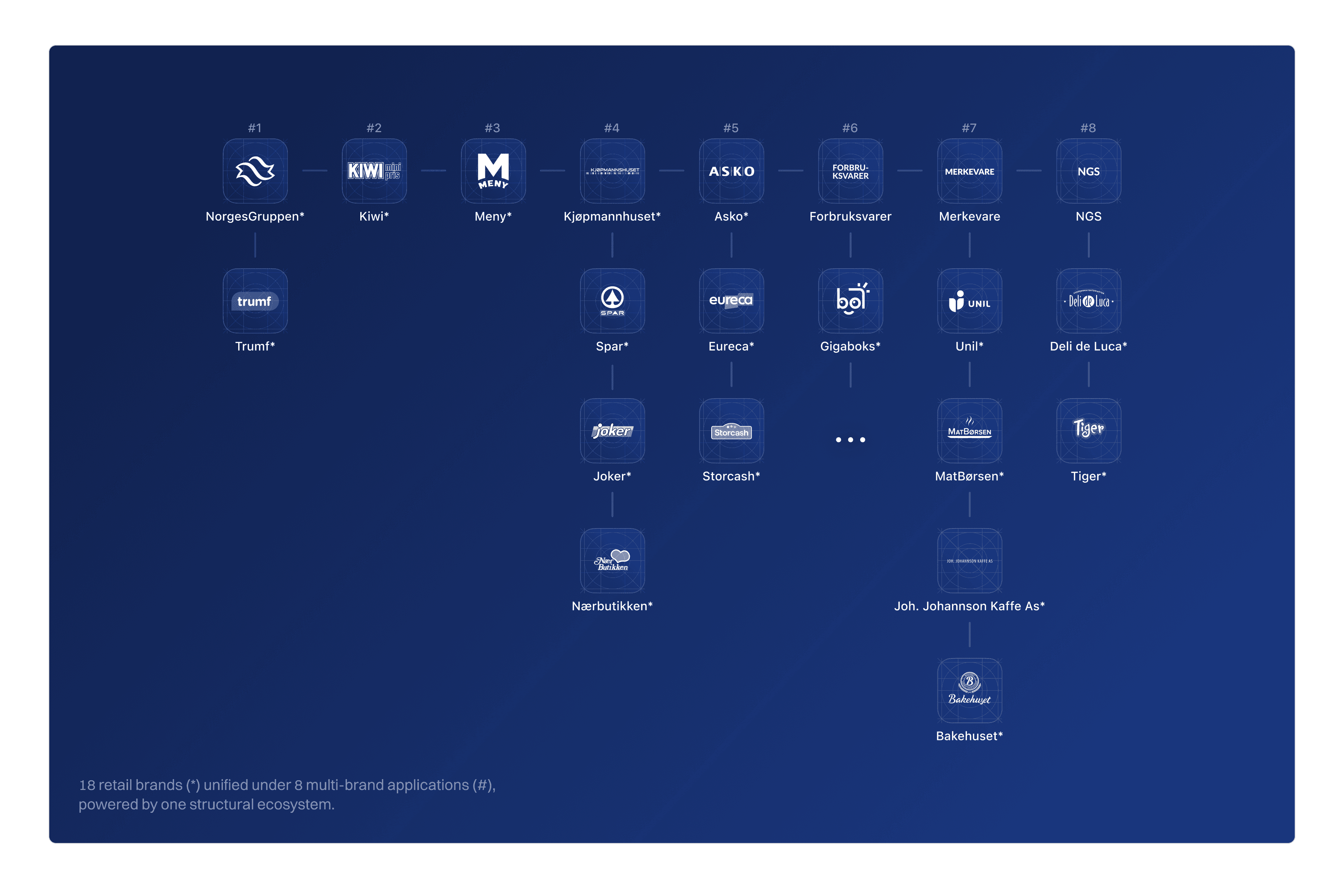
NorgesGruppen is Norway's largest grocery retailer, with nearly 50% of the national market share and 18 brands serving millions of people across the country. Our job was to connect over 50,000 frontline employees through a unified communication platform — delivered across 8 apps, built on a SaaS product that was never designed for this kind of complexity. The platform had no native multi-brand architecture, limited CSS access, and no clear path forward. What started as an app delivery project quickly became something much bigger.
Scope of Work
App Design
Prototyping
Design System
Multi-Brand Architecture
Component System
Theming System
Outcome
+
users onboarded since launch
/
+
monthly active users
/
%
active rate across brands
Challenge
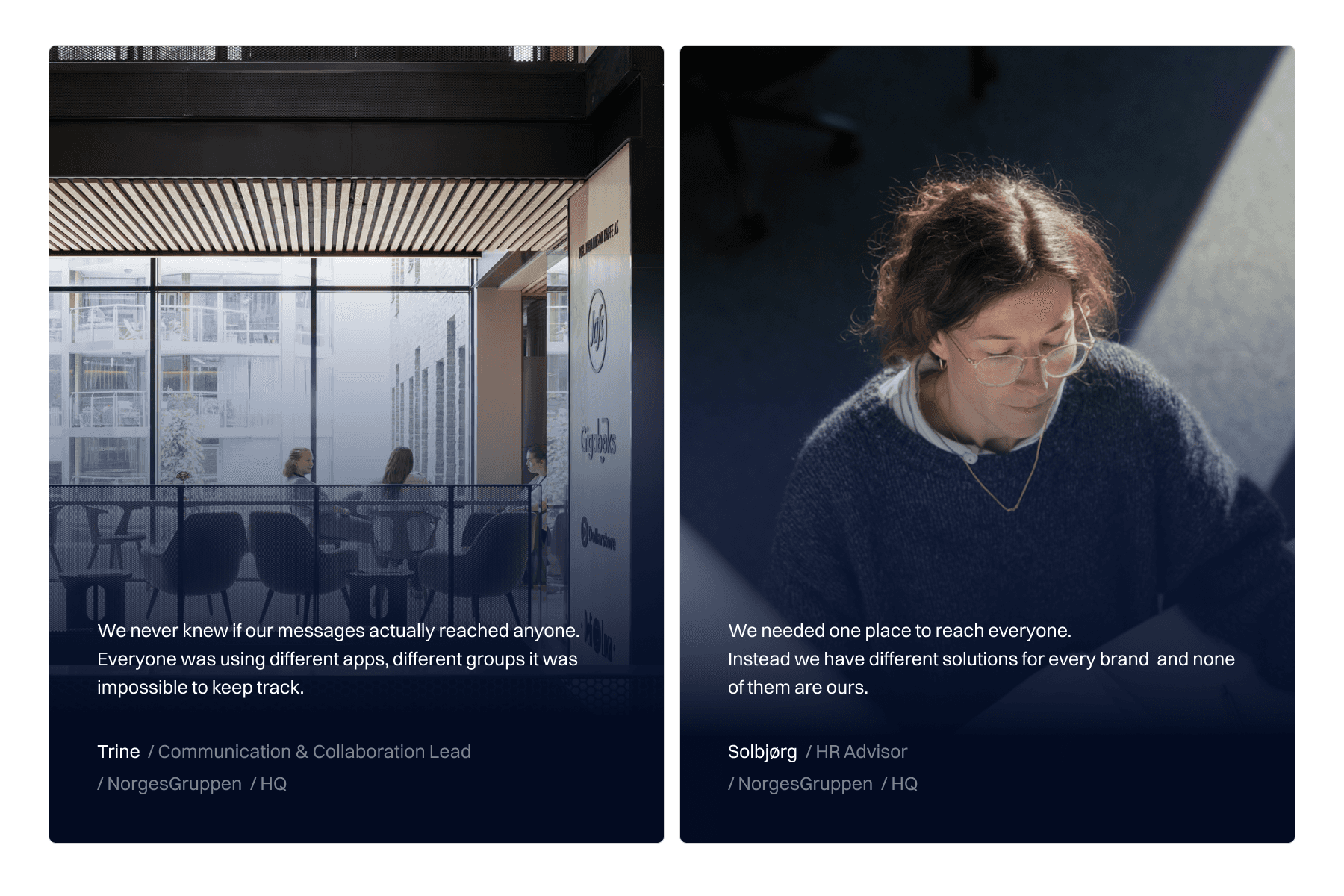
Internal communication scattered across personal apps, social media, and word of mouth.
NorgesGruppen had no reliable way to reach its 50,000+ frontline employees across 18 retail brands. Each brand had filled that gap in its own way, and the result was a fragmented, uncontrollable flow of information that no one could track or trust.
Approach
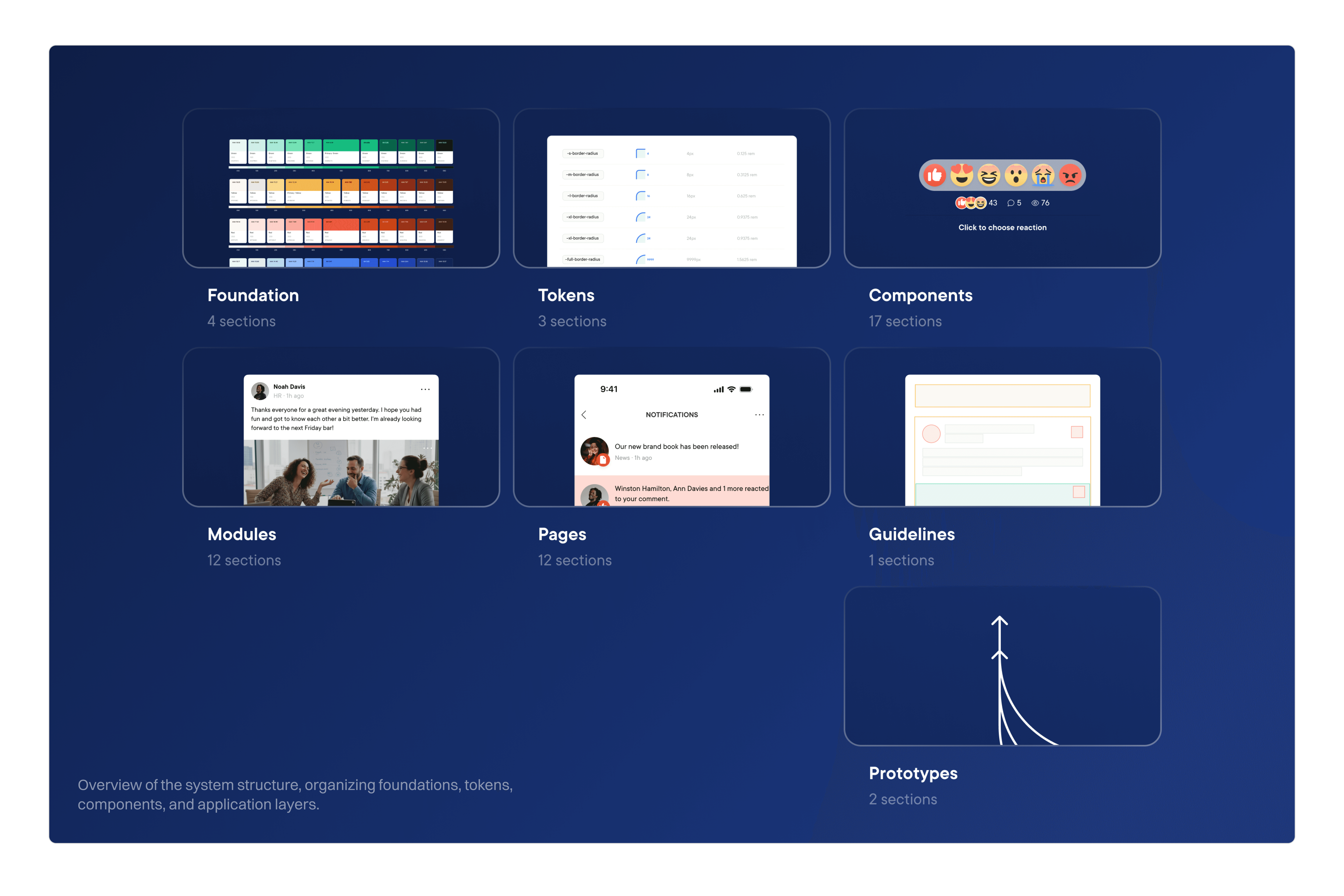
Before any screen was designed, we had to agree on how the system should work.
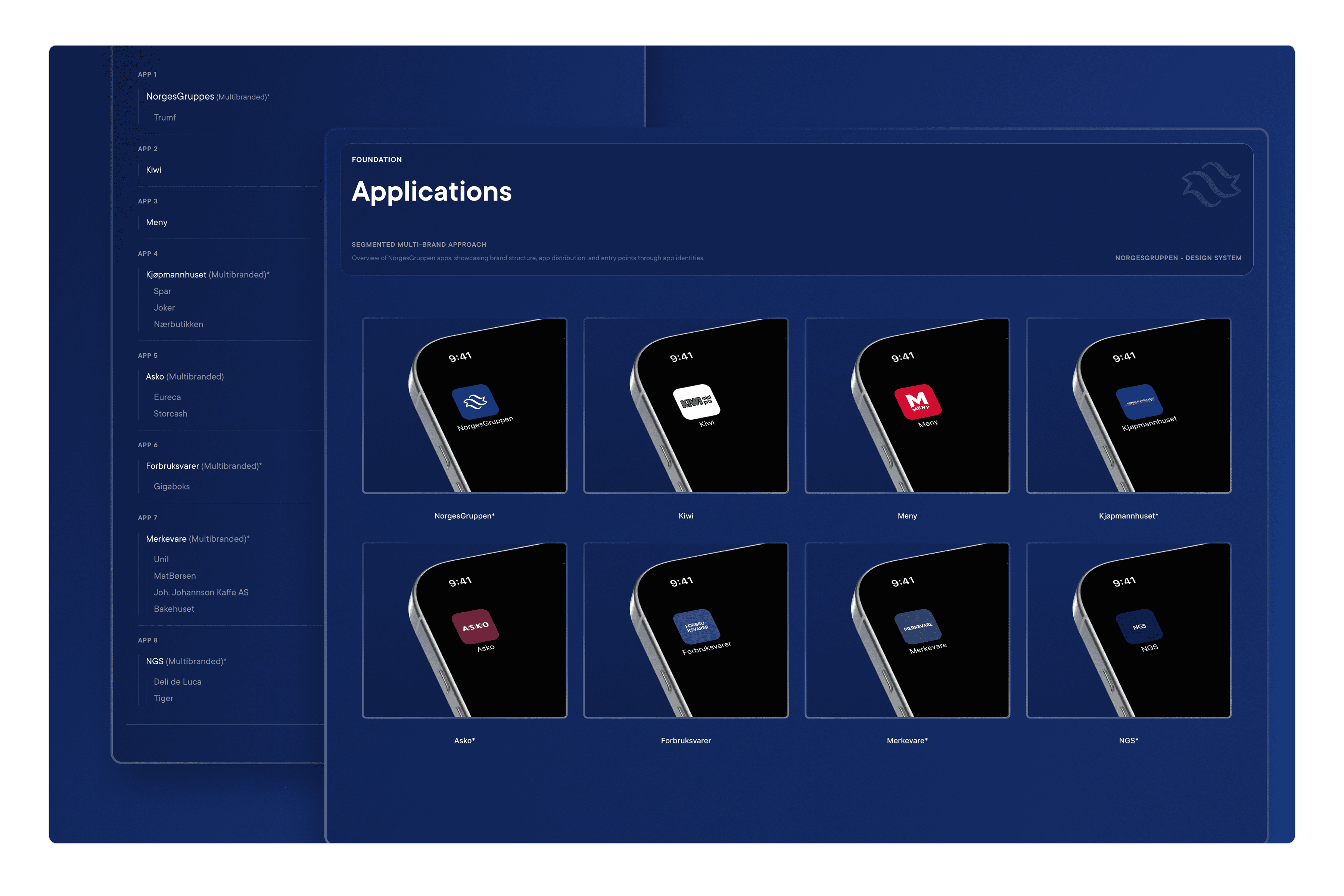
We spent the early stages working closely with the Product Manager and HQ, not on screens, but on structure. After long discussions and listening closely to the client, we landed on eight apps, some single-branded and some multi-branded. We defined the module system, news feed, social wall, profile, and more, and established clear rules on what needed to stay fixed and what each brand could own. That's what made the system scalable.
System Architecture
With the structure agreed on, it was time to build.
We started by building the system inside Figma. The client shared their brand assets early on, and from there we built everything from the primitives up. The goal was simple, create a shared foundation that all brands could sit on top of, with controlled flexibility where it mattered. One system, designed to hold 18 different identities together without any of them losing what made them distinct.
Foundation
The first step was getting the primitives right.
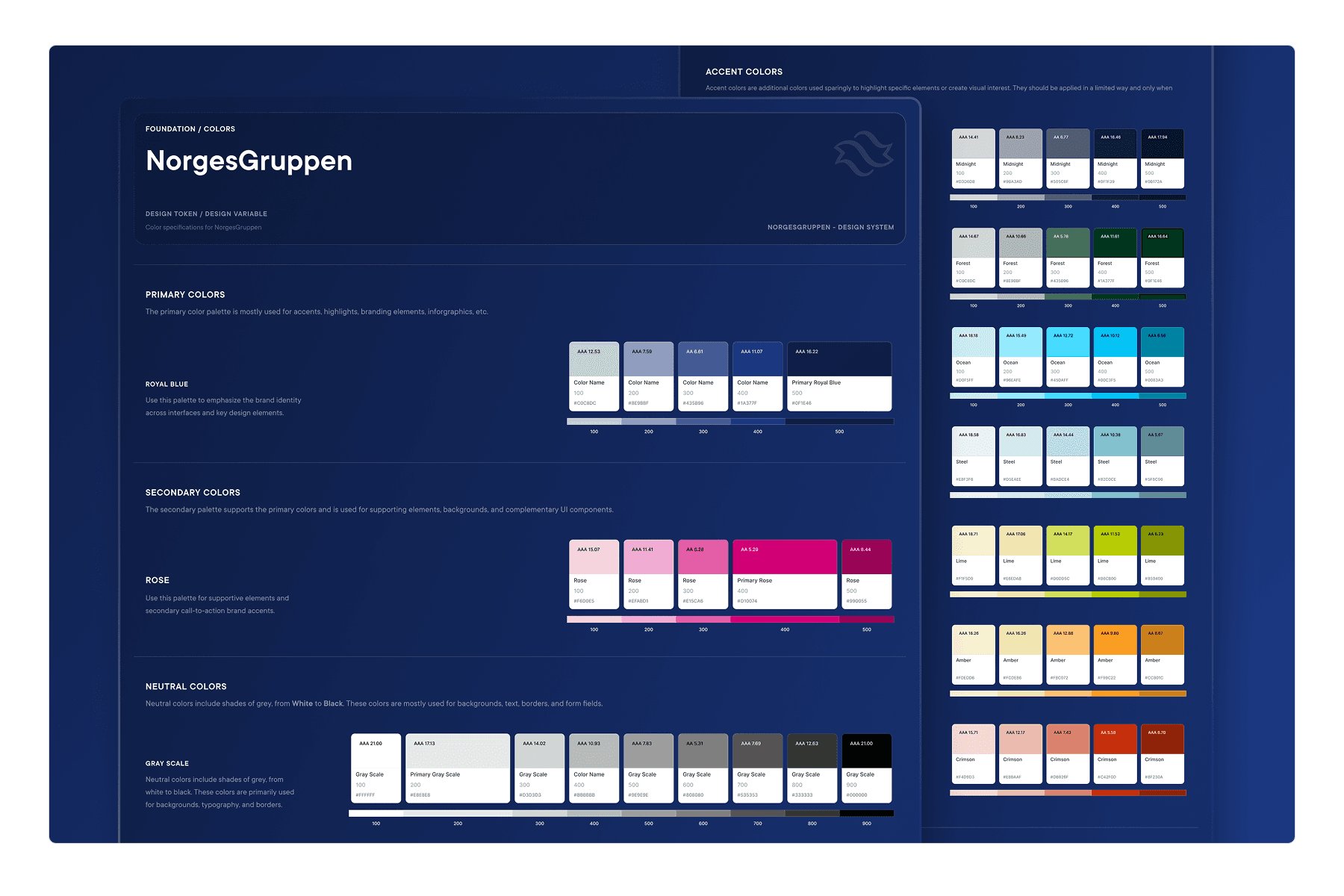
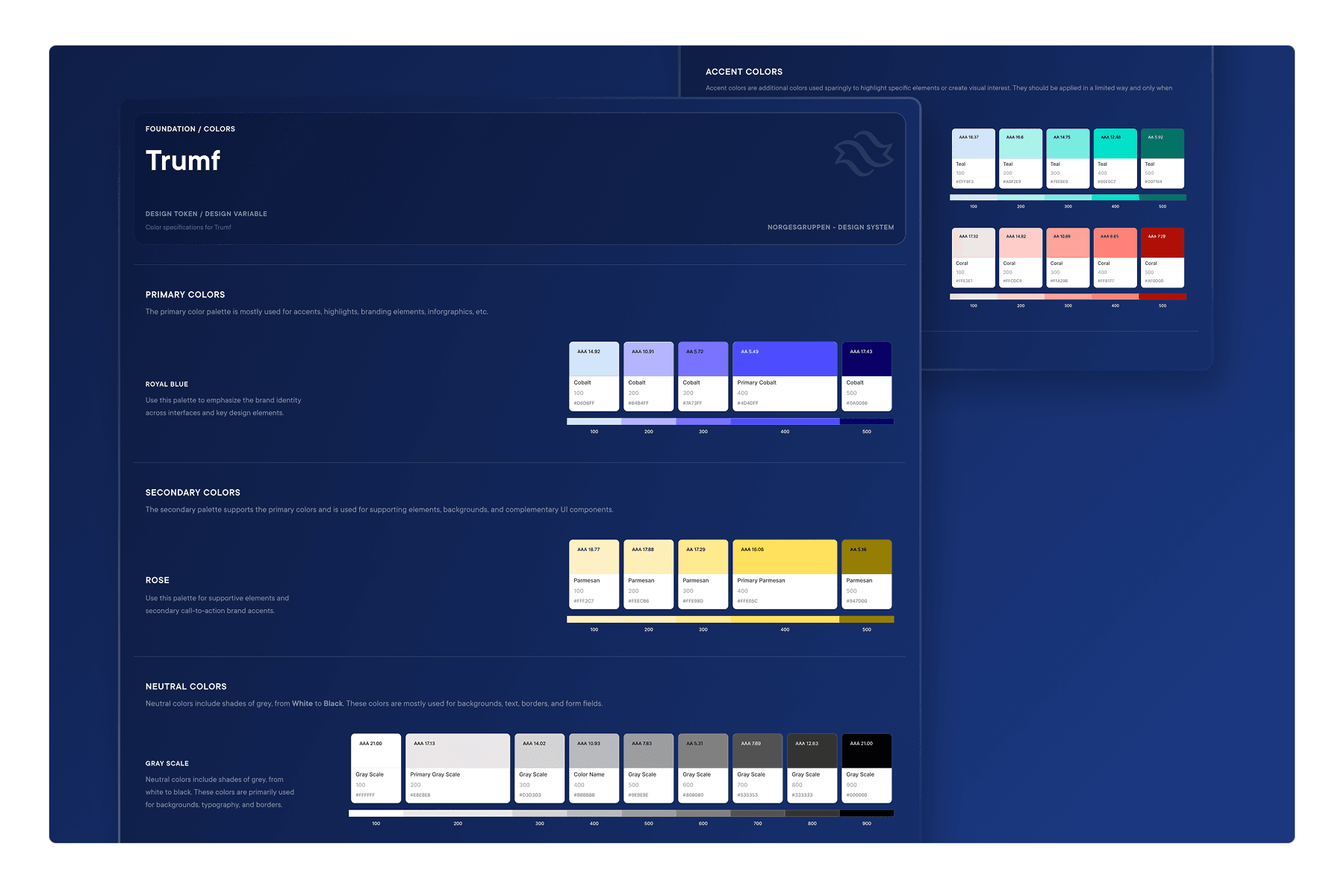
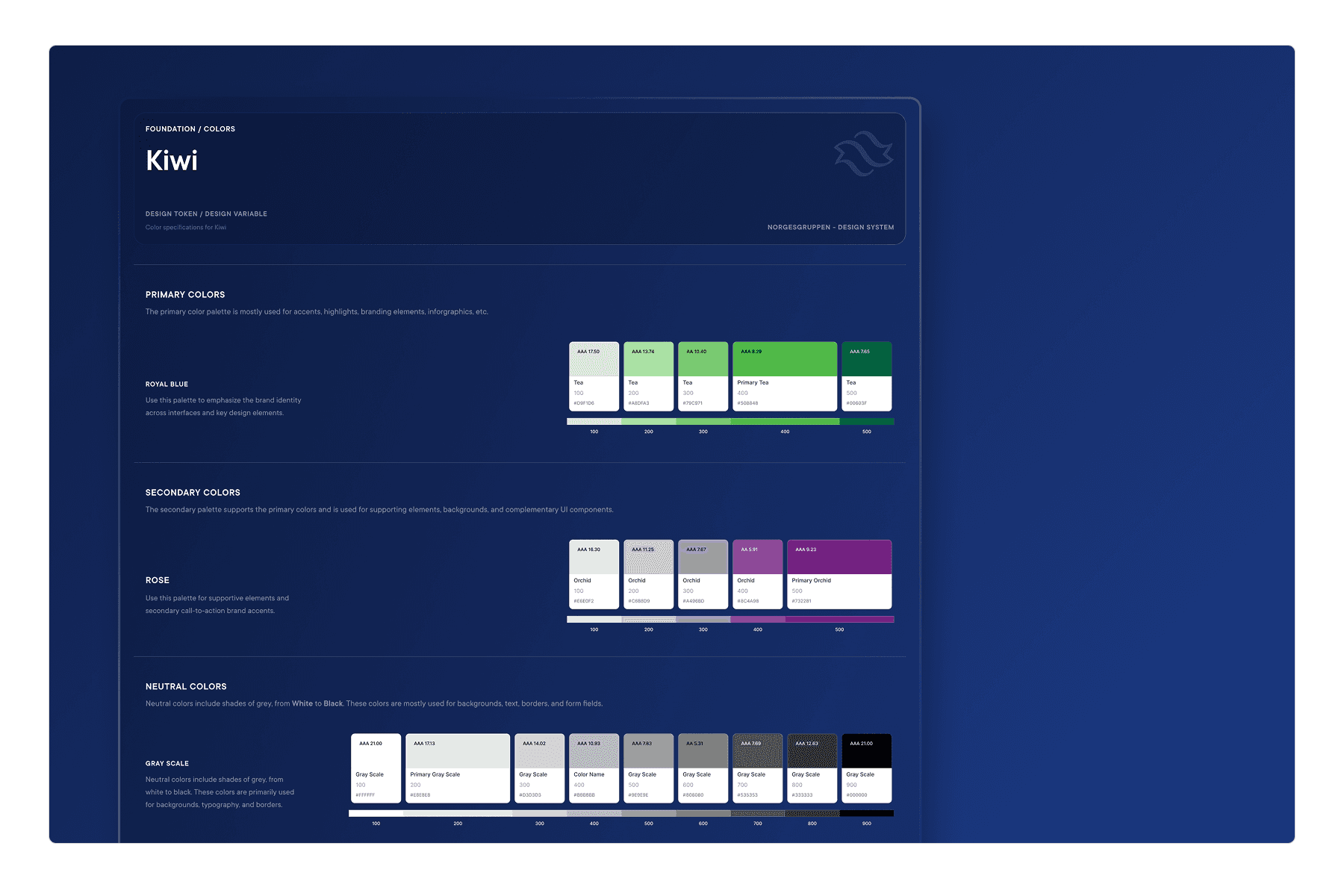
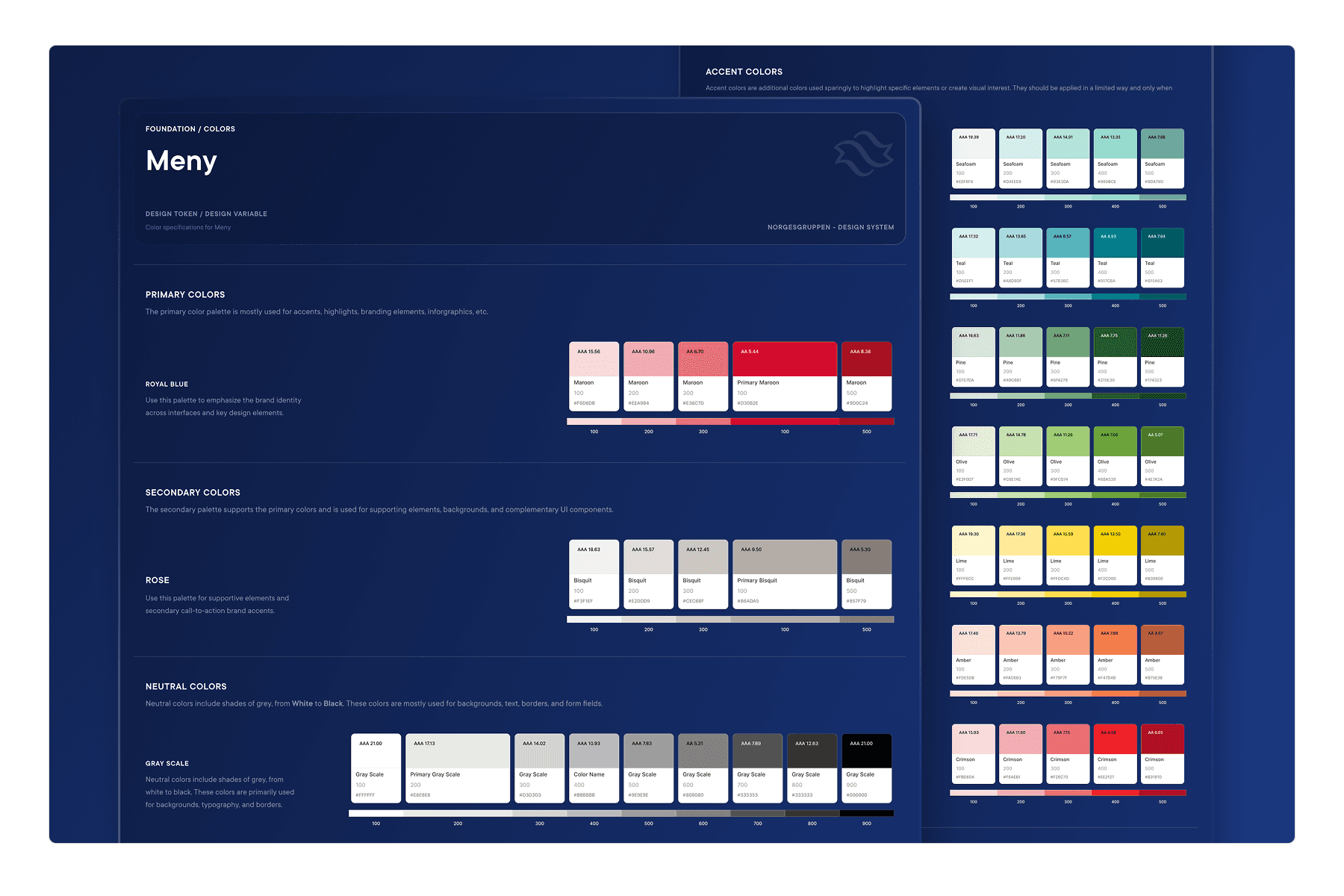
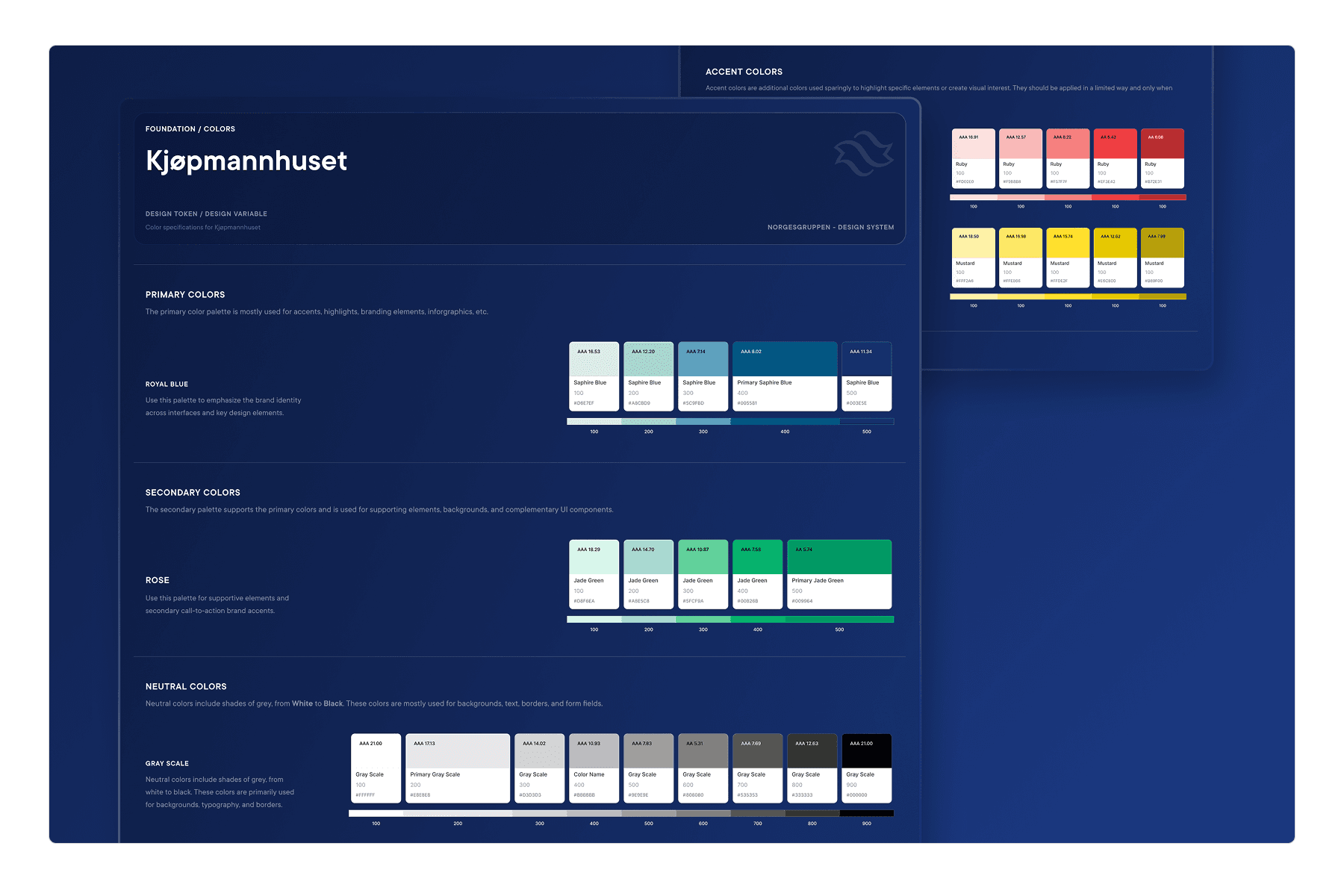
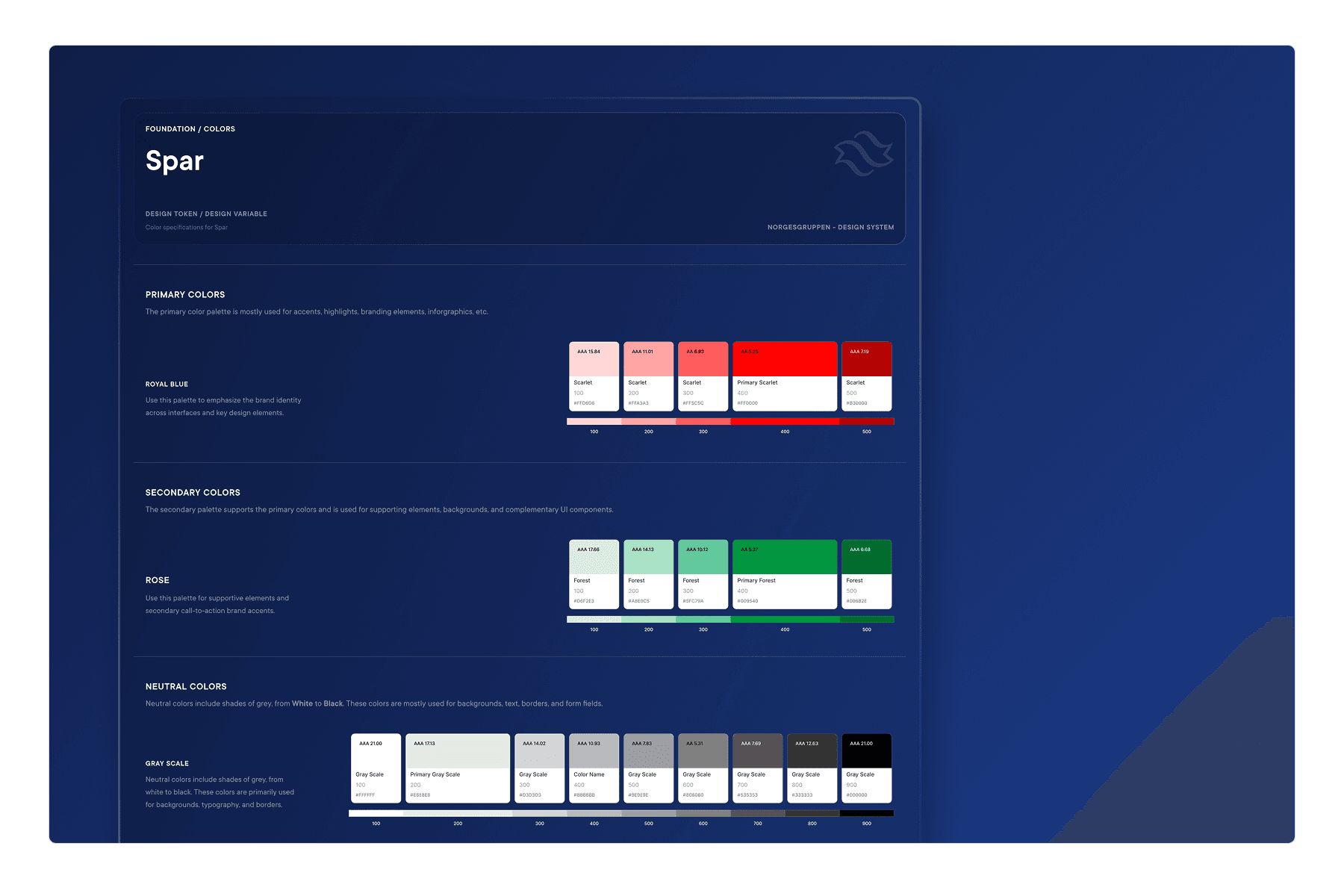
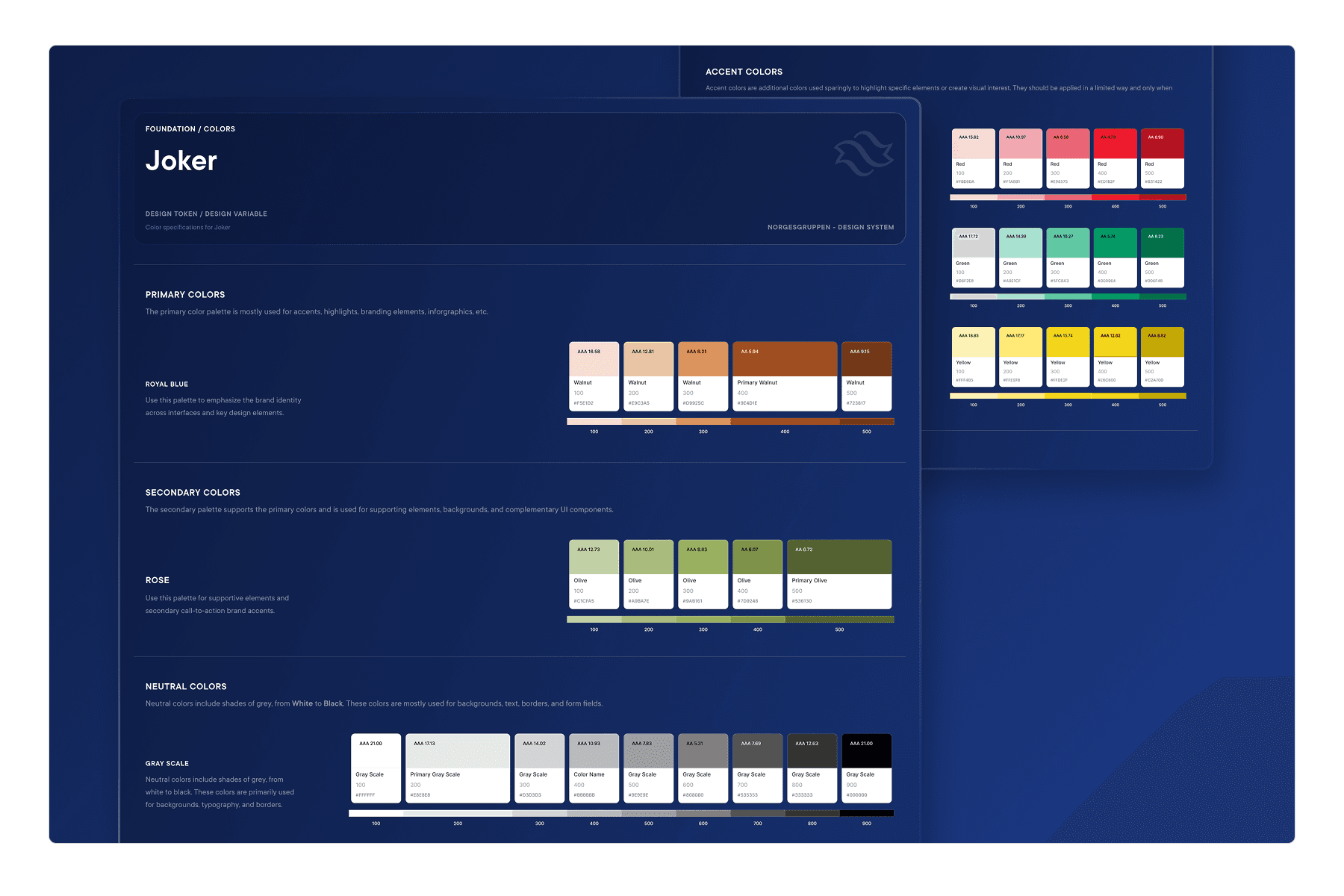
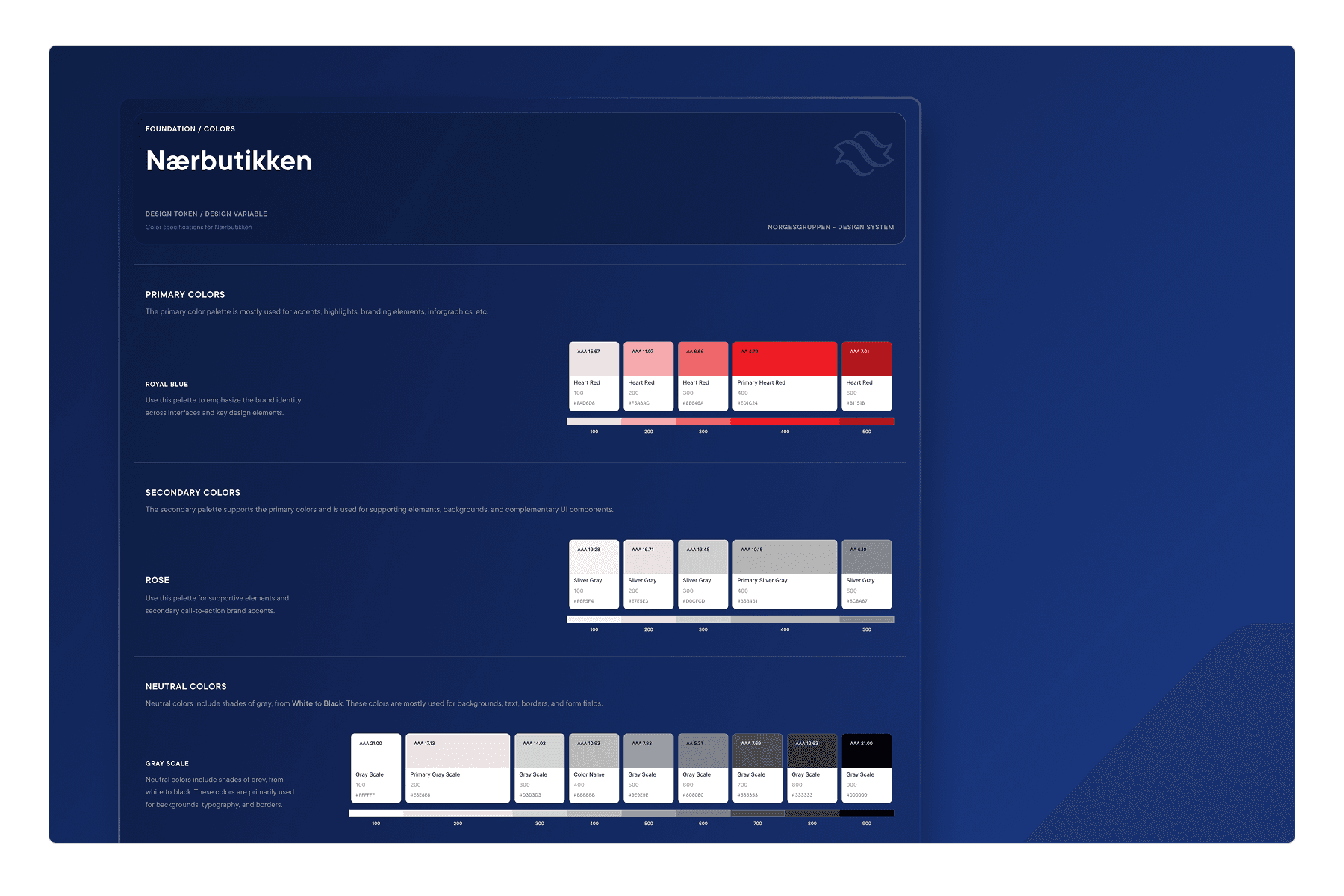
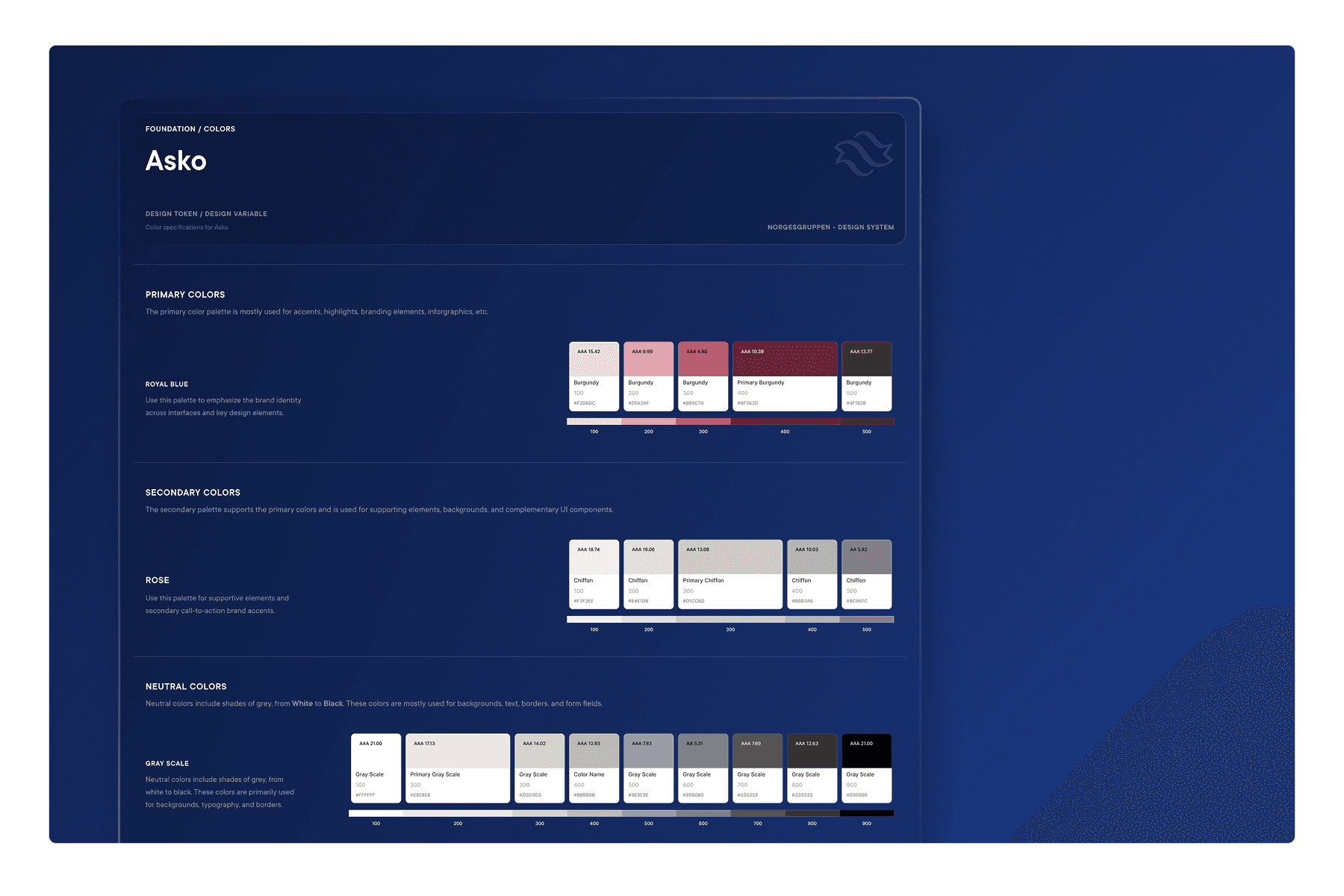
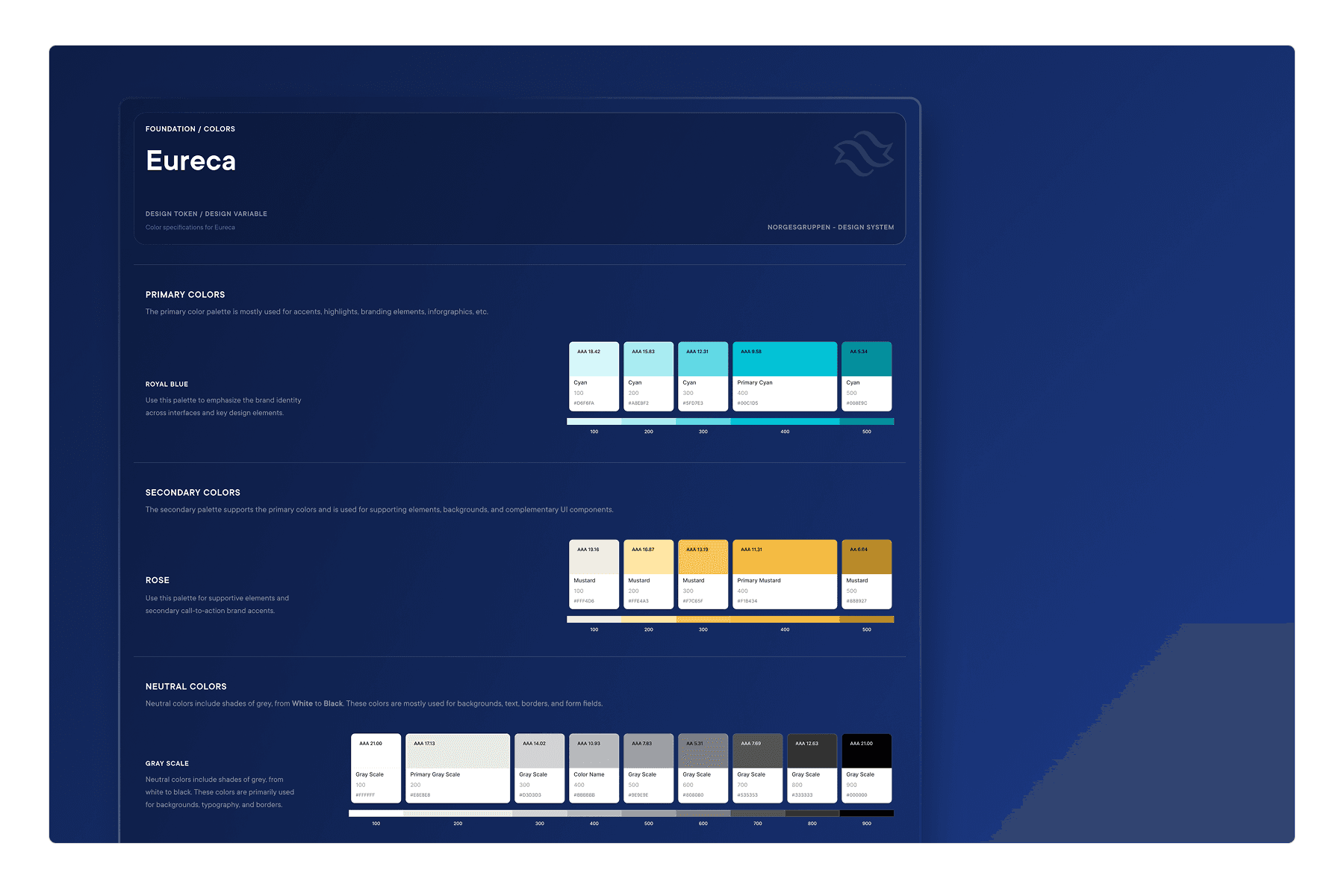
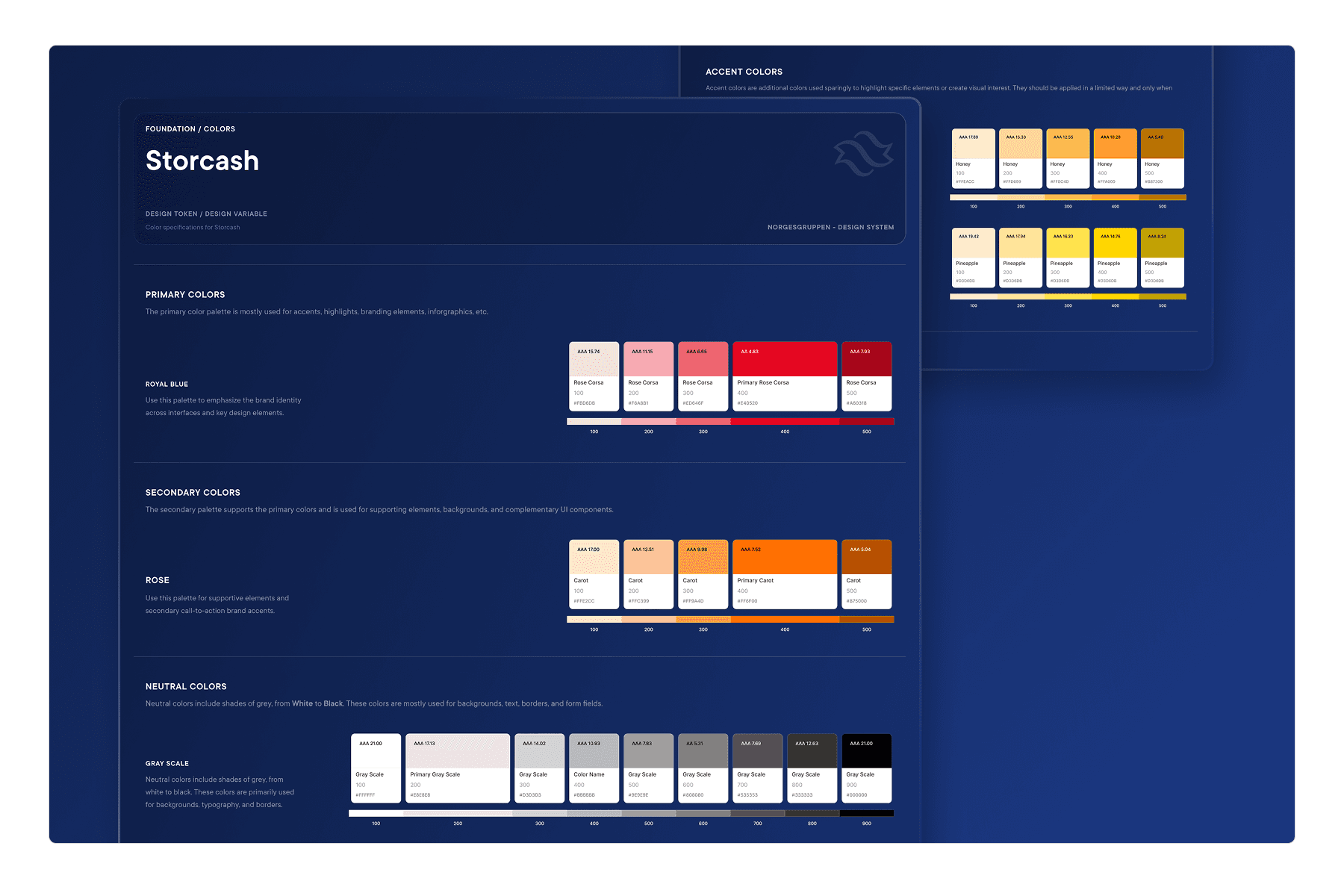
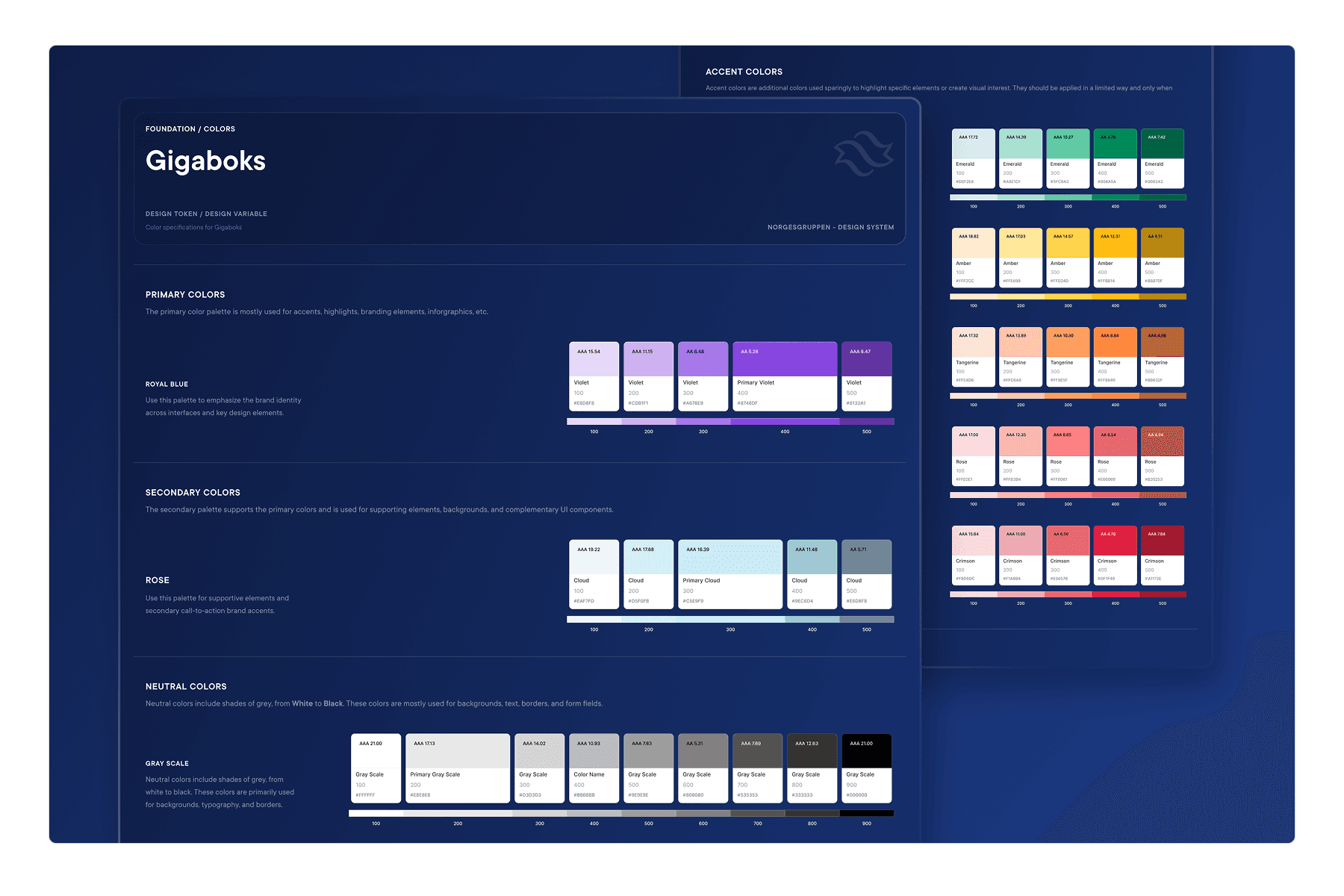
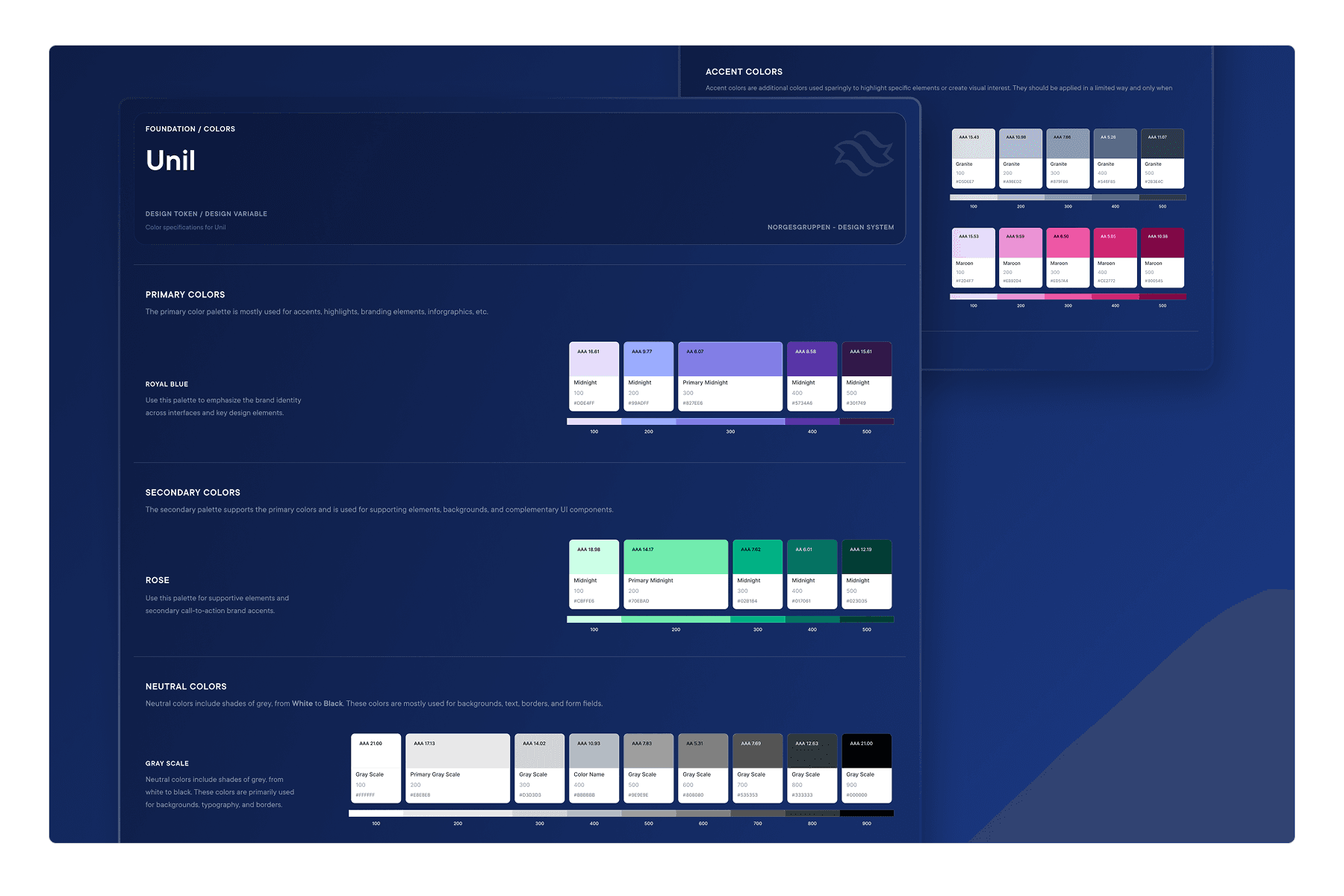
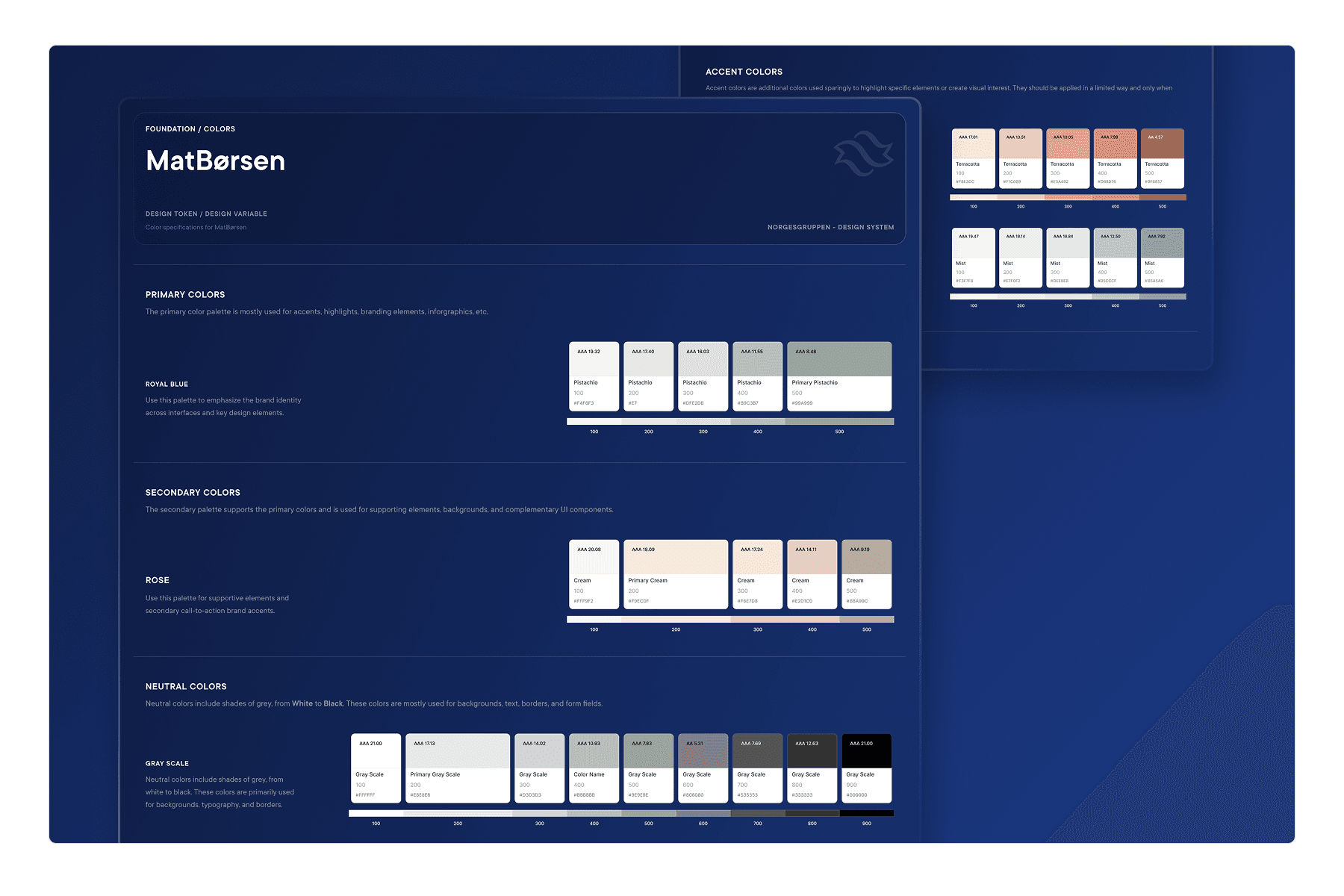
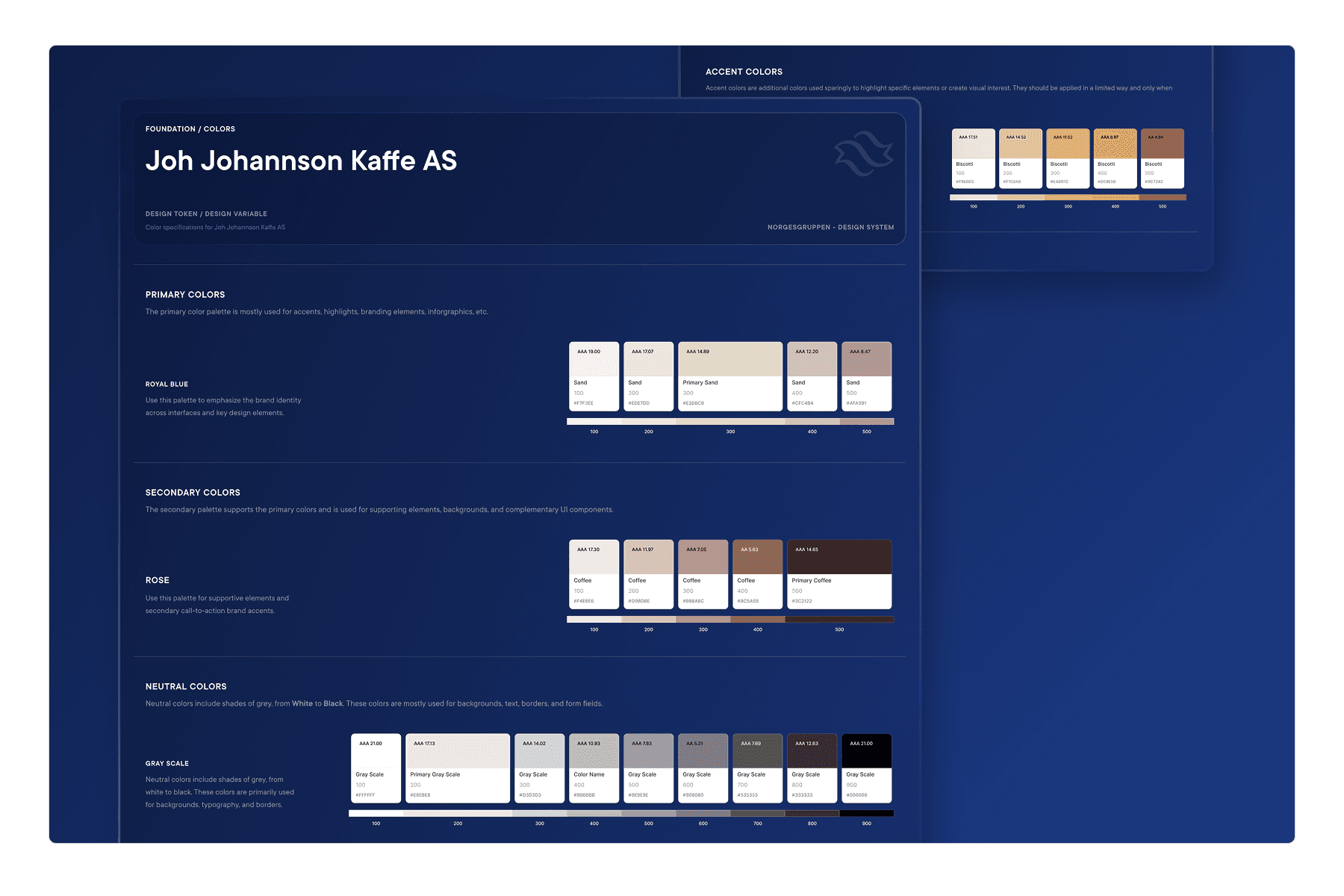
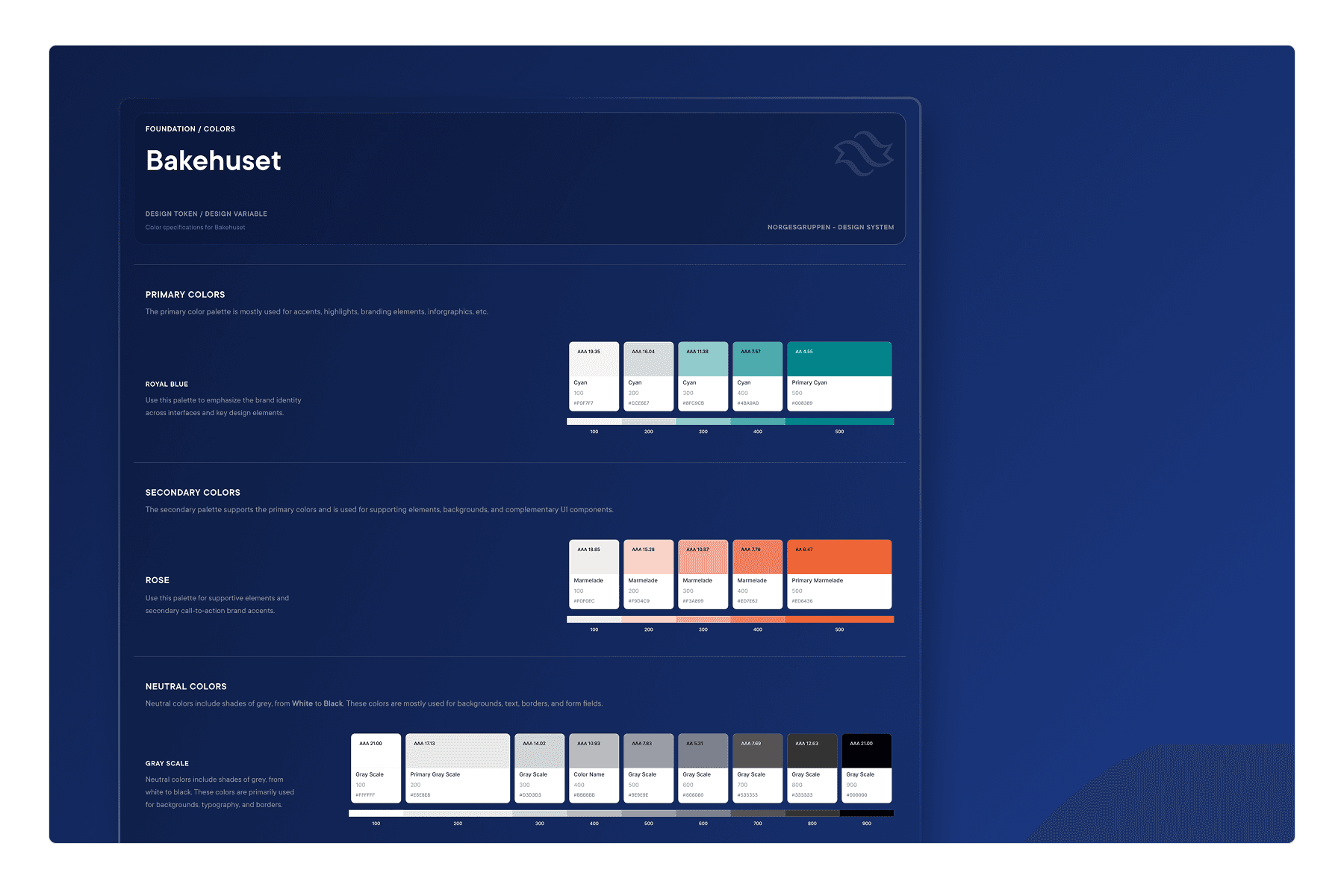
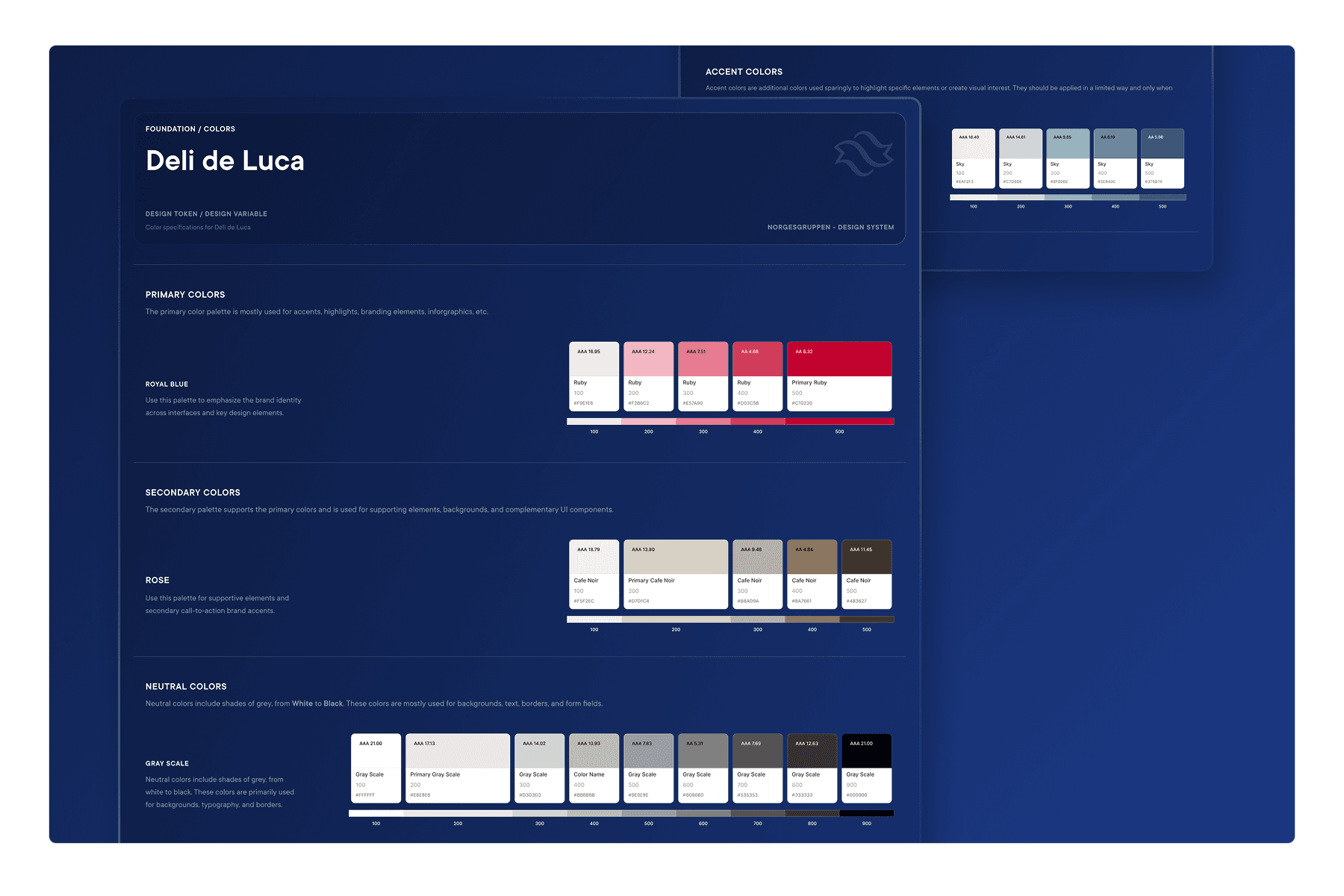
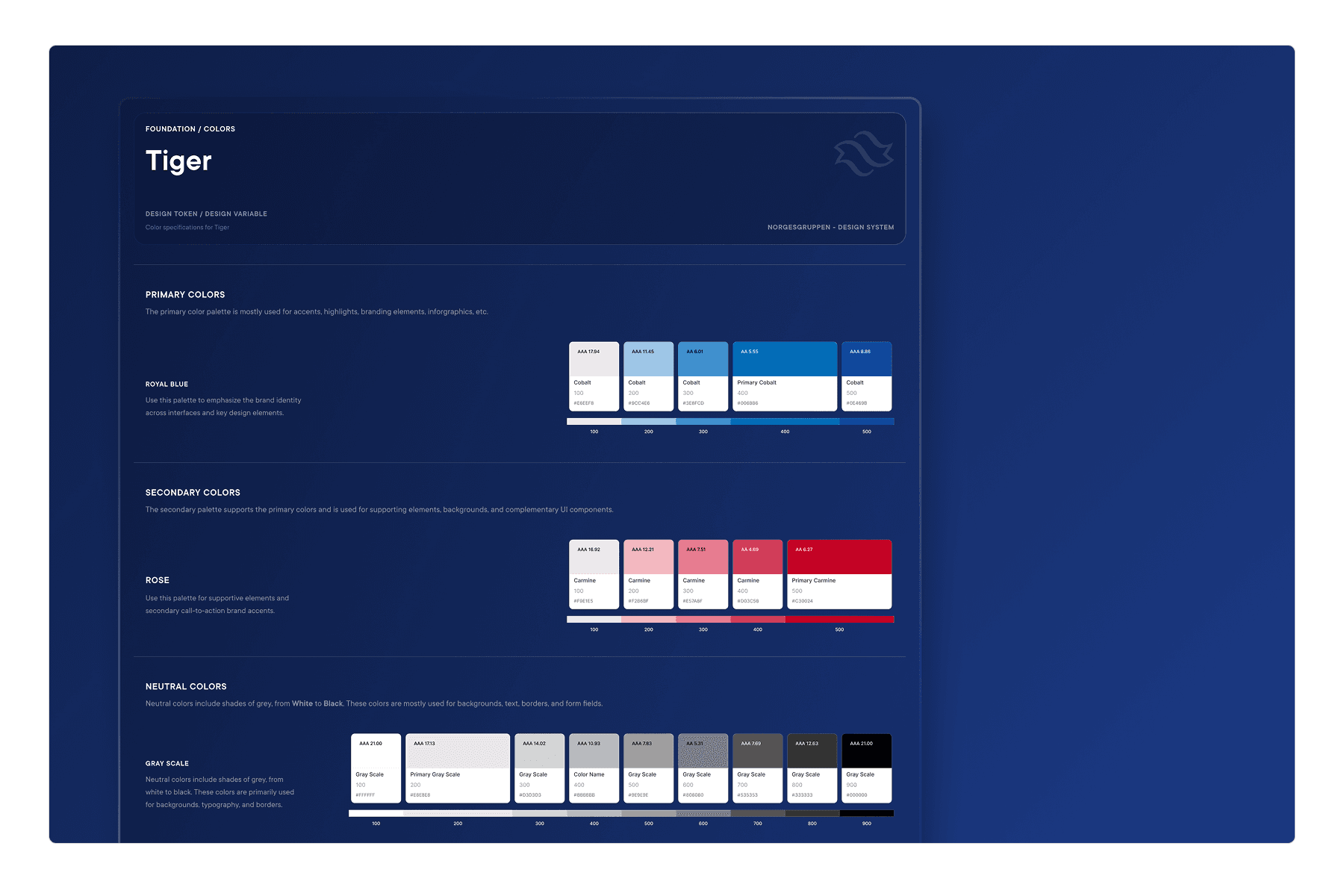
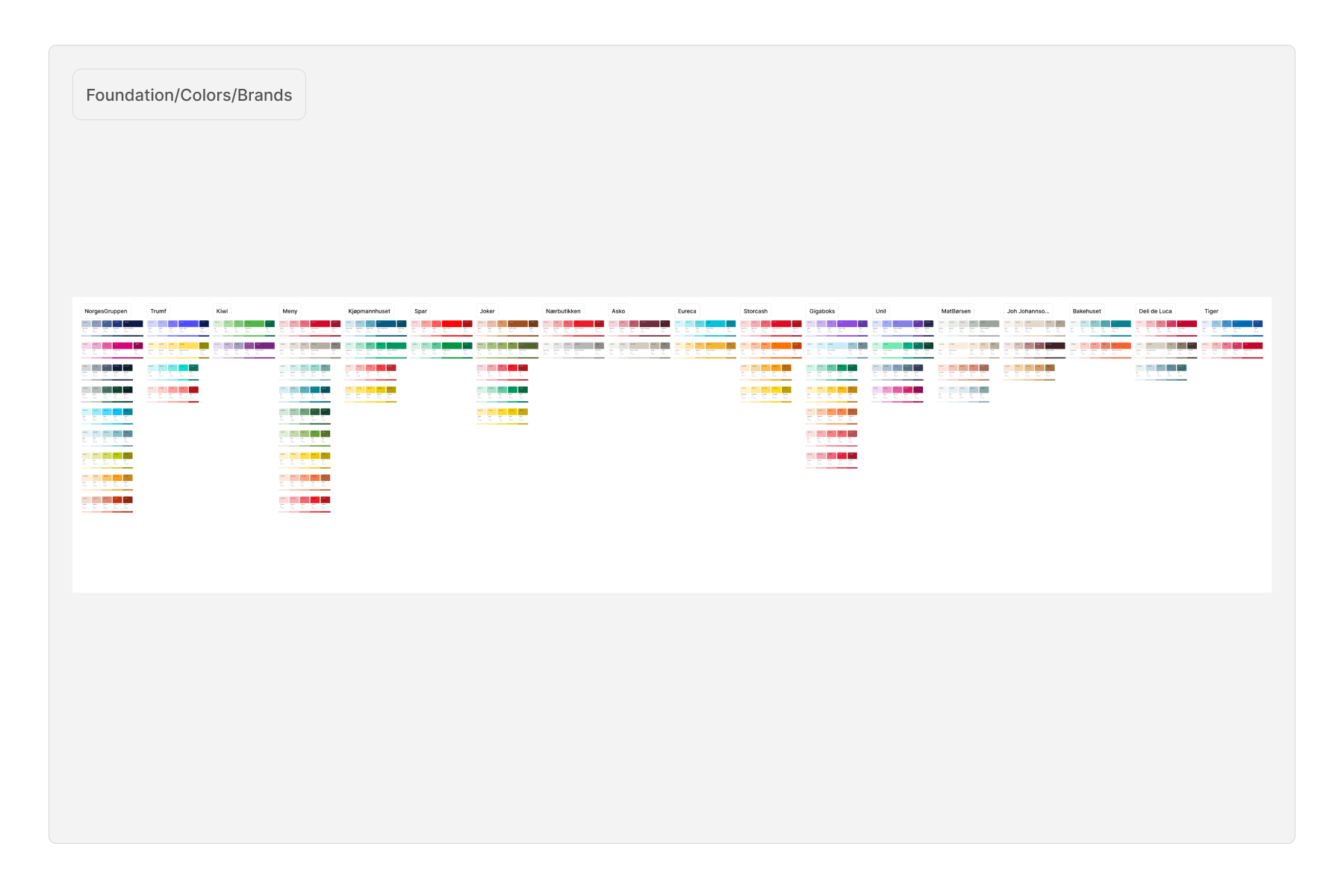
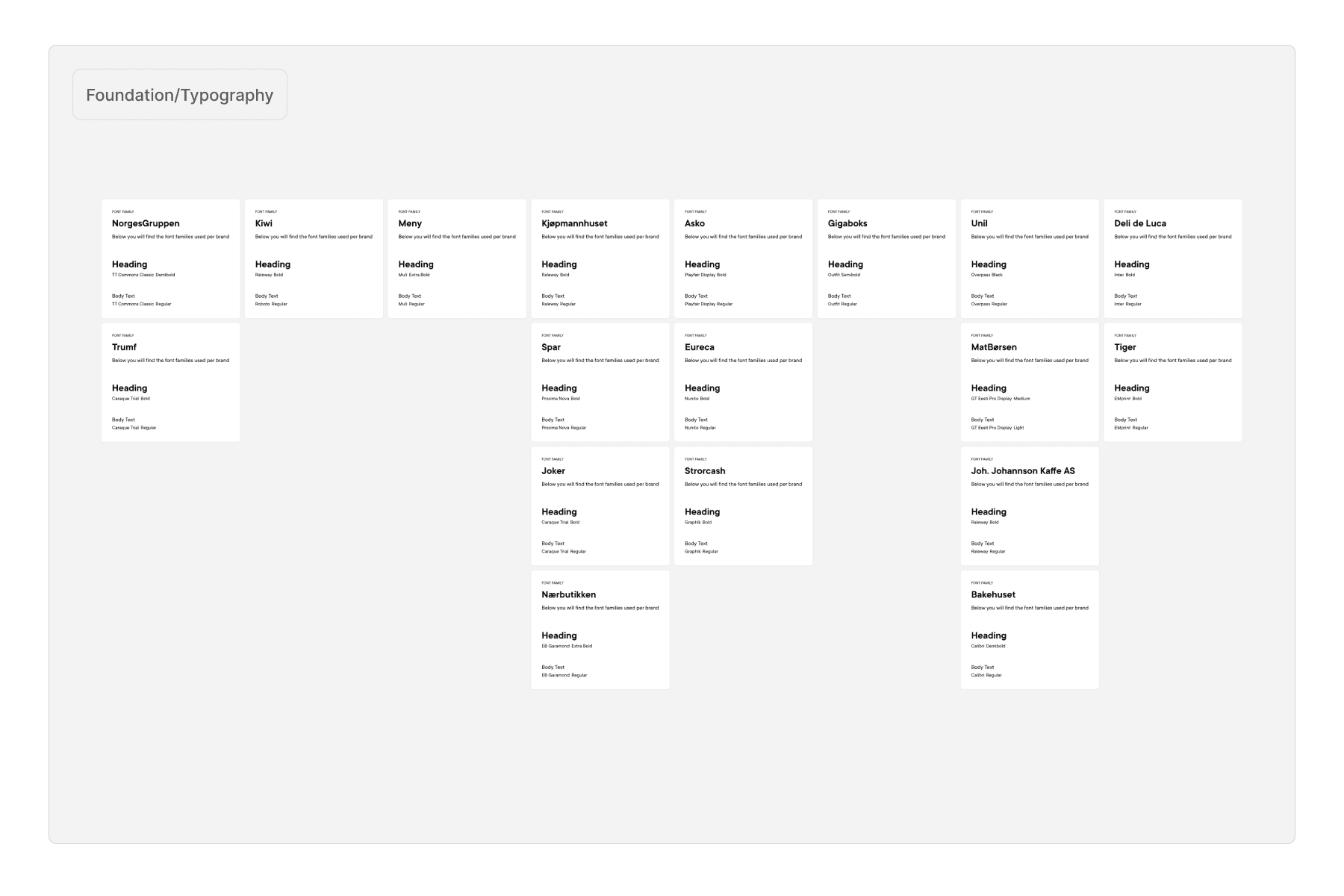
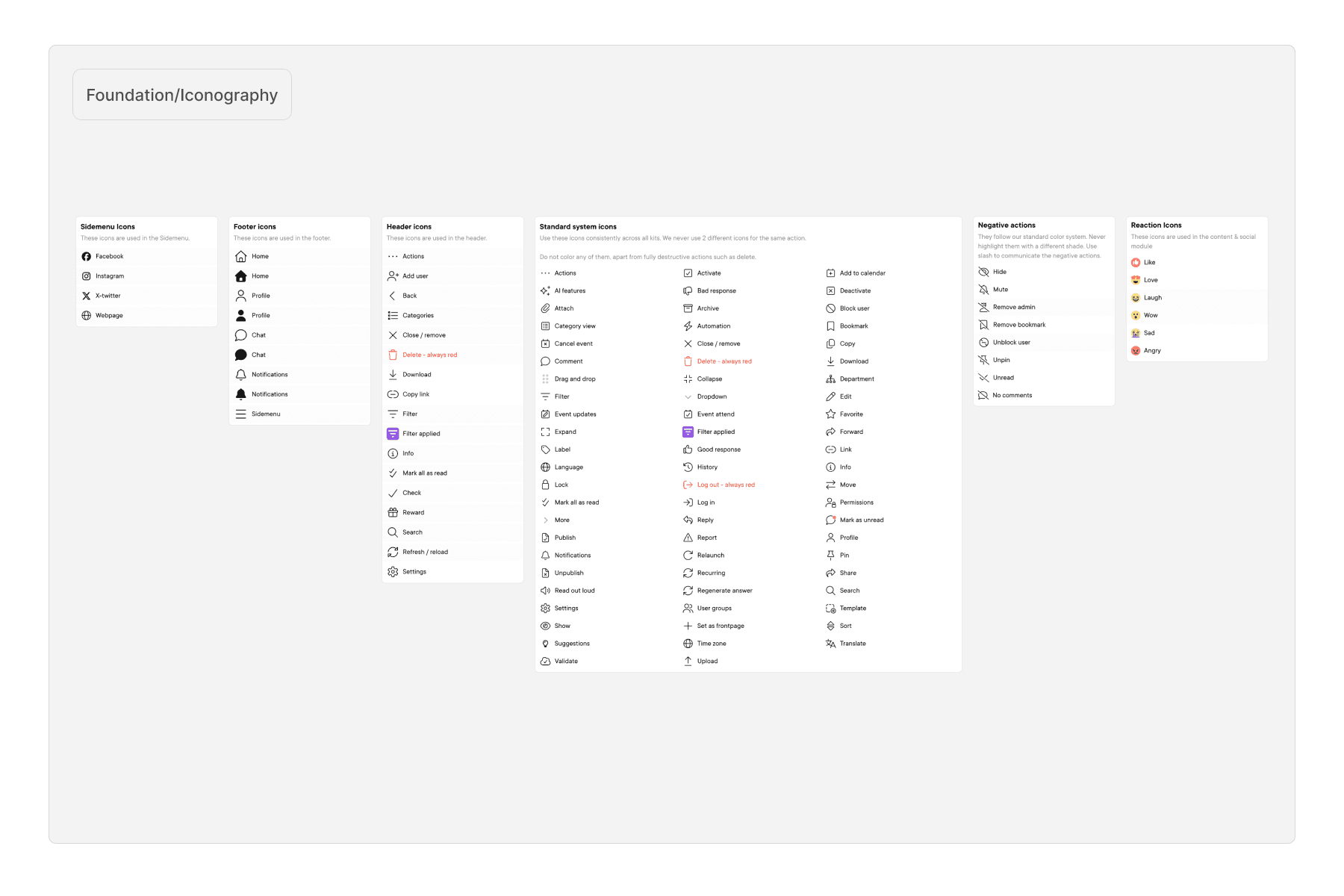
The assets needed to be organised and structured in a scalable way, so early on, we decided to move forward with one shared neutral palette across all brands, covering neutrals, warnings, alerts, confirmations, and link colors. For the brands, I restructured each color palette into a consistent scale, with primary, secondary, and accent colors clearly separated. Every brand had enough room to feel like itself, without the system losing consistency.
Building the System
Once the foundation was in place, we started building.
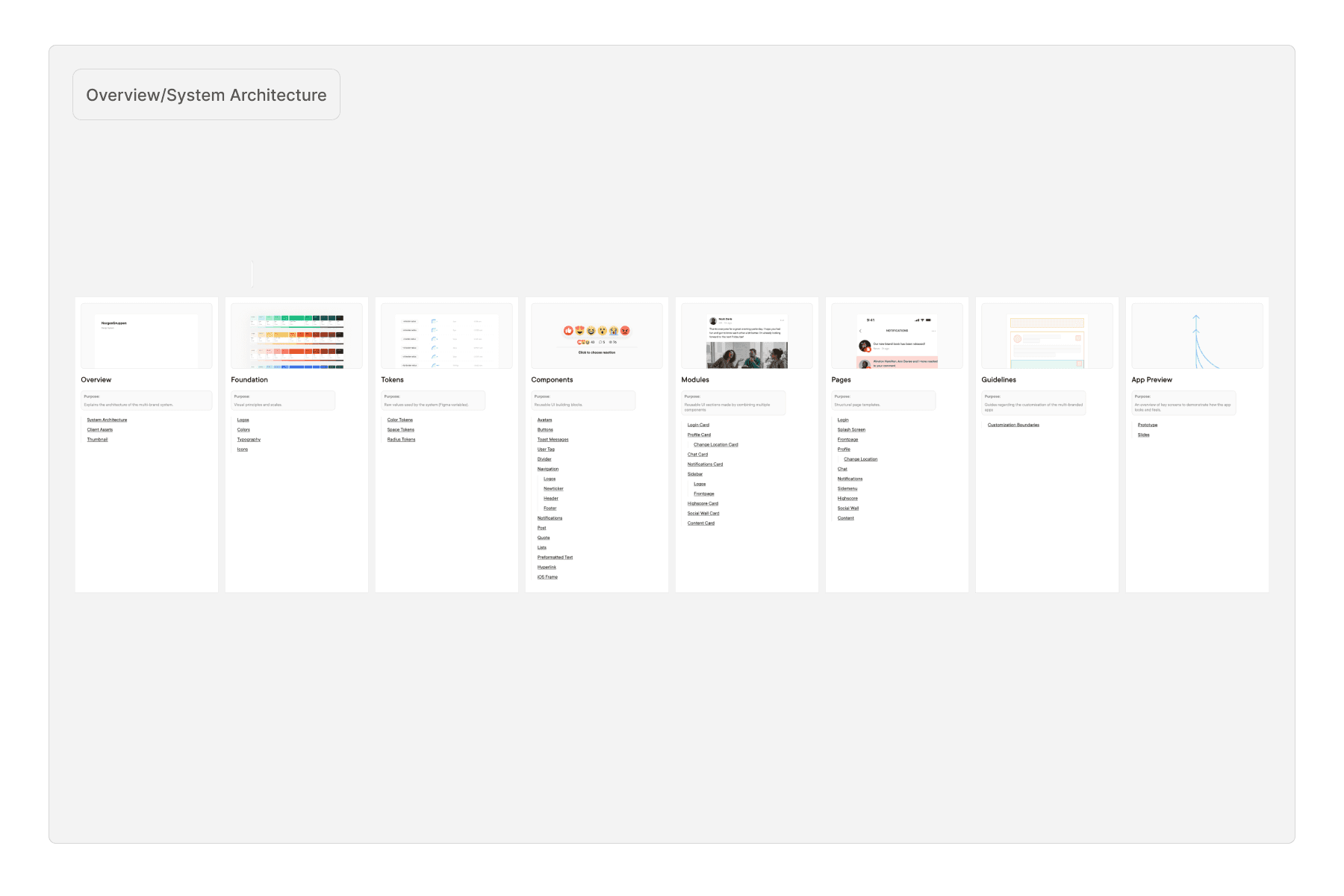
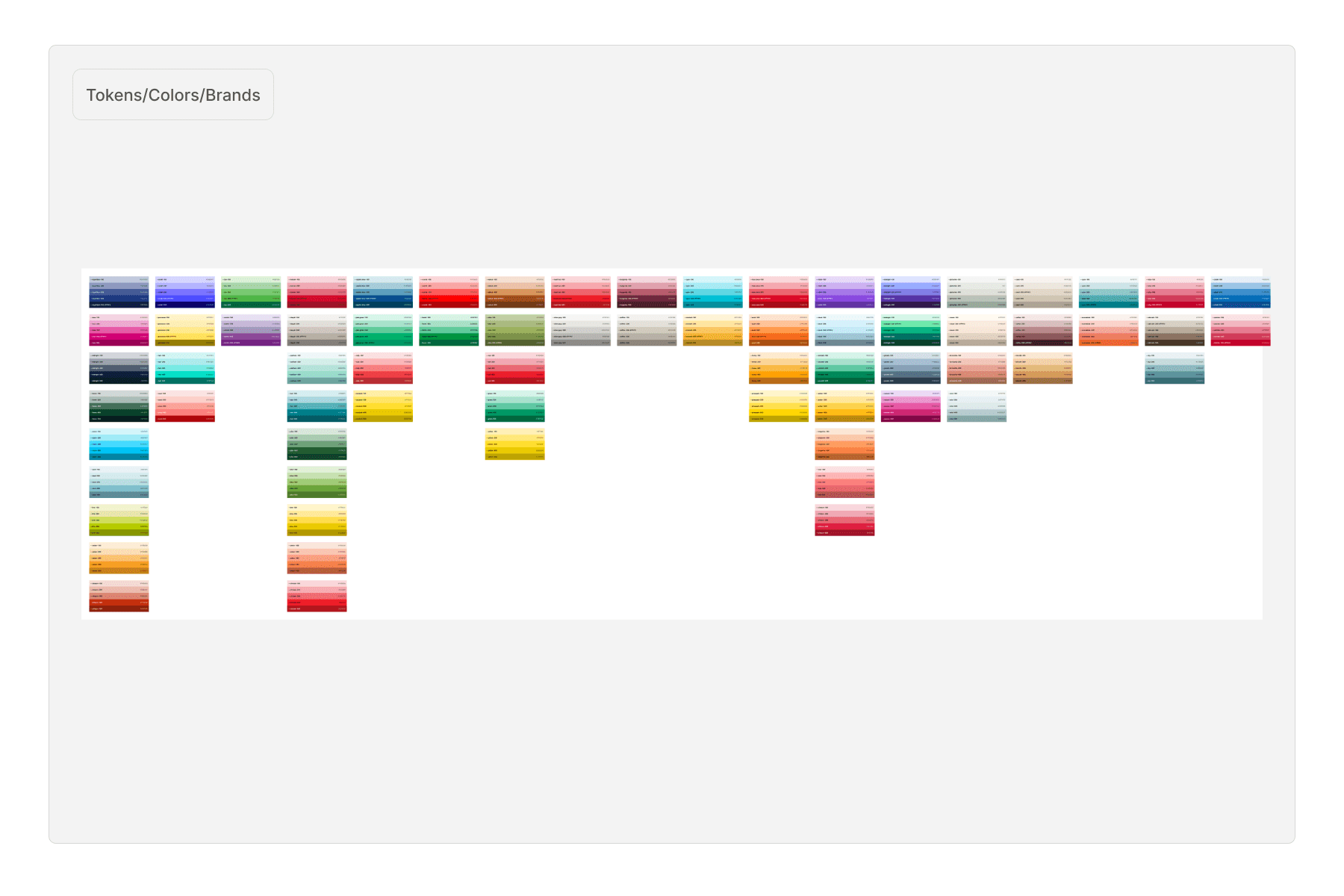
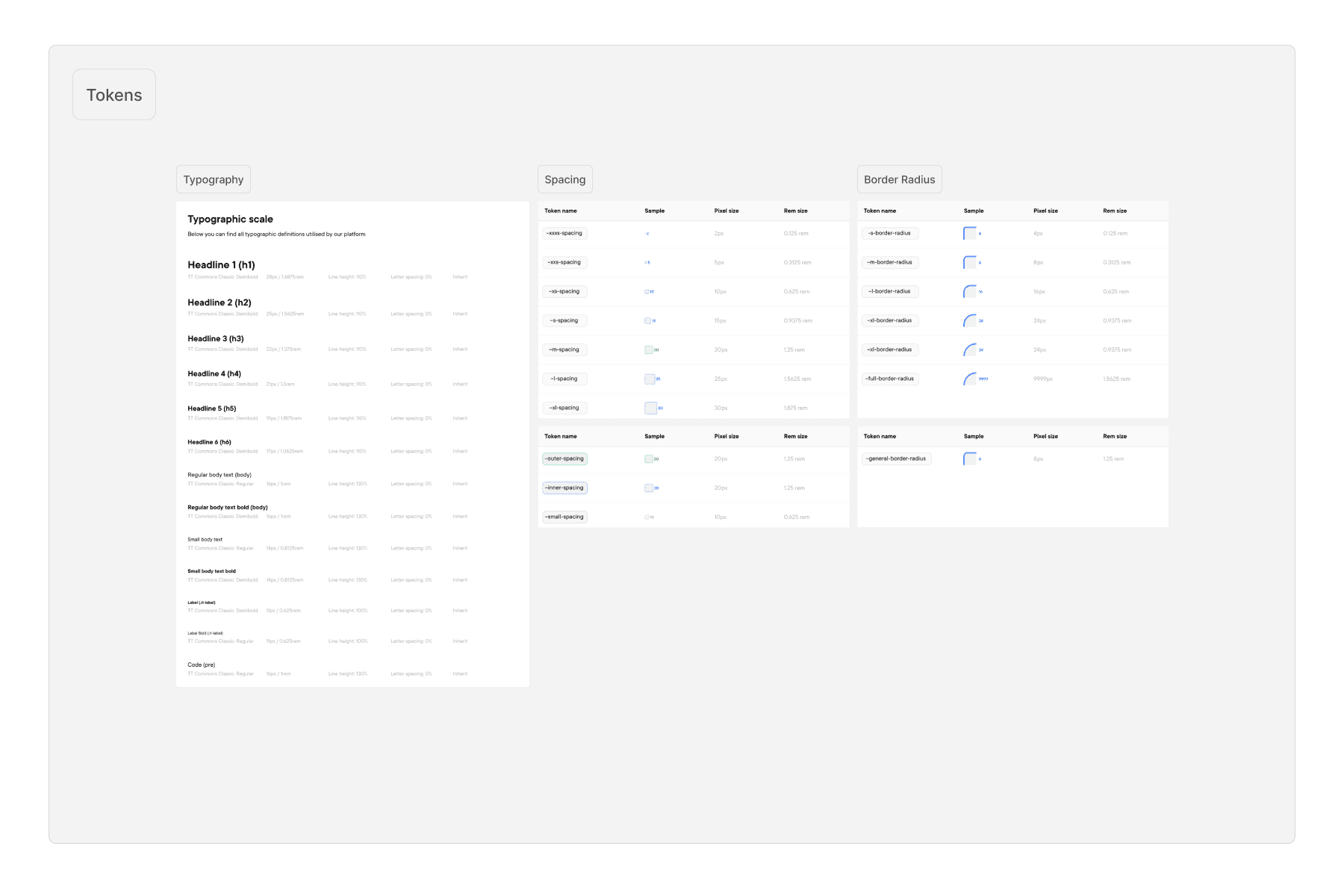
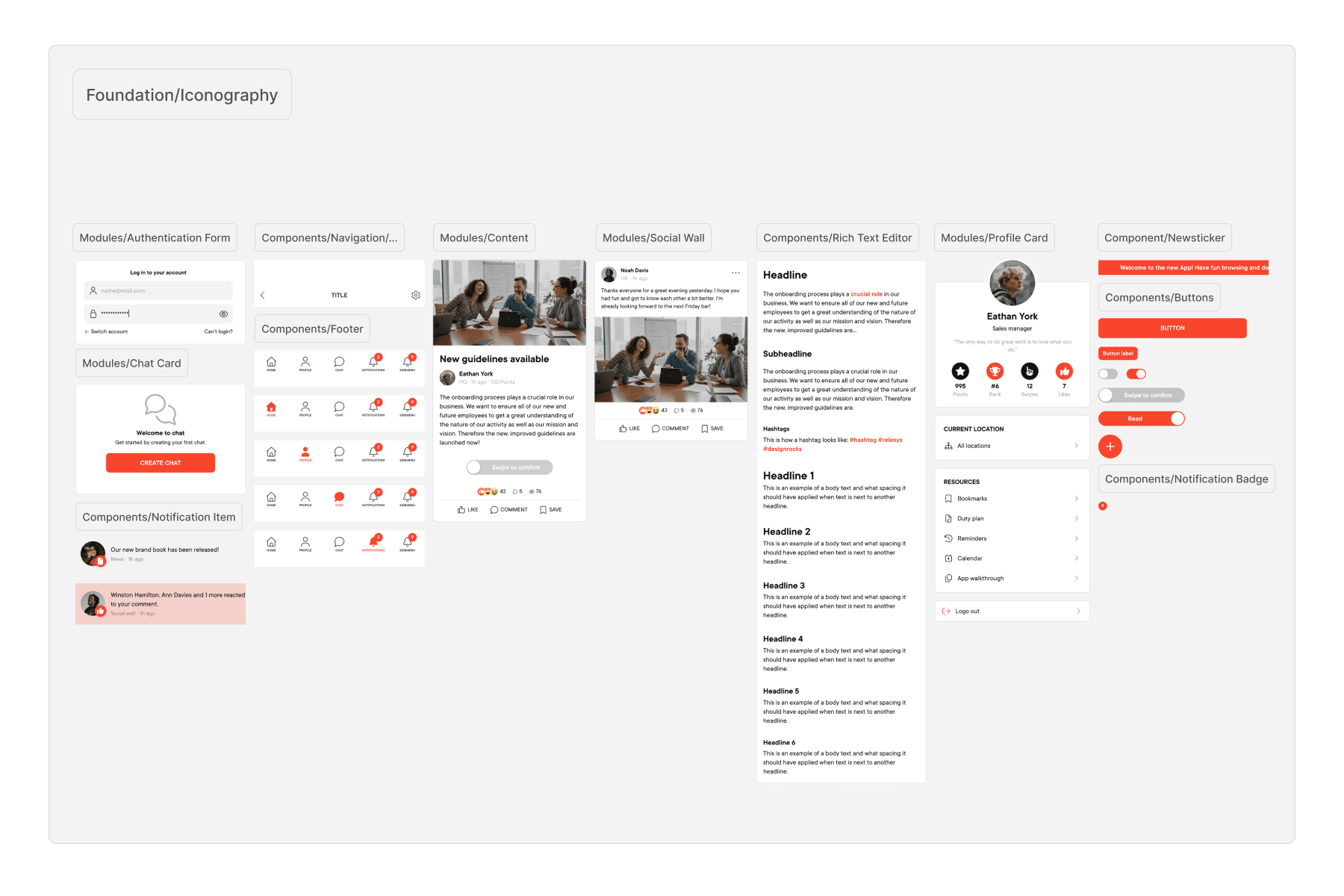
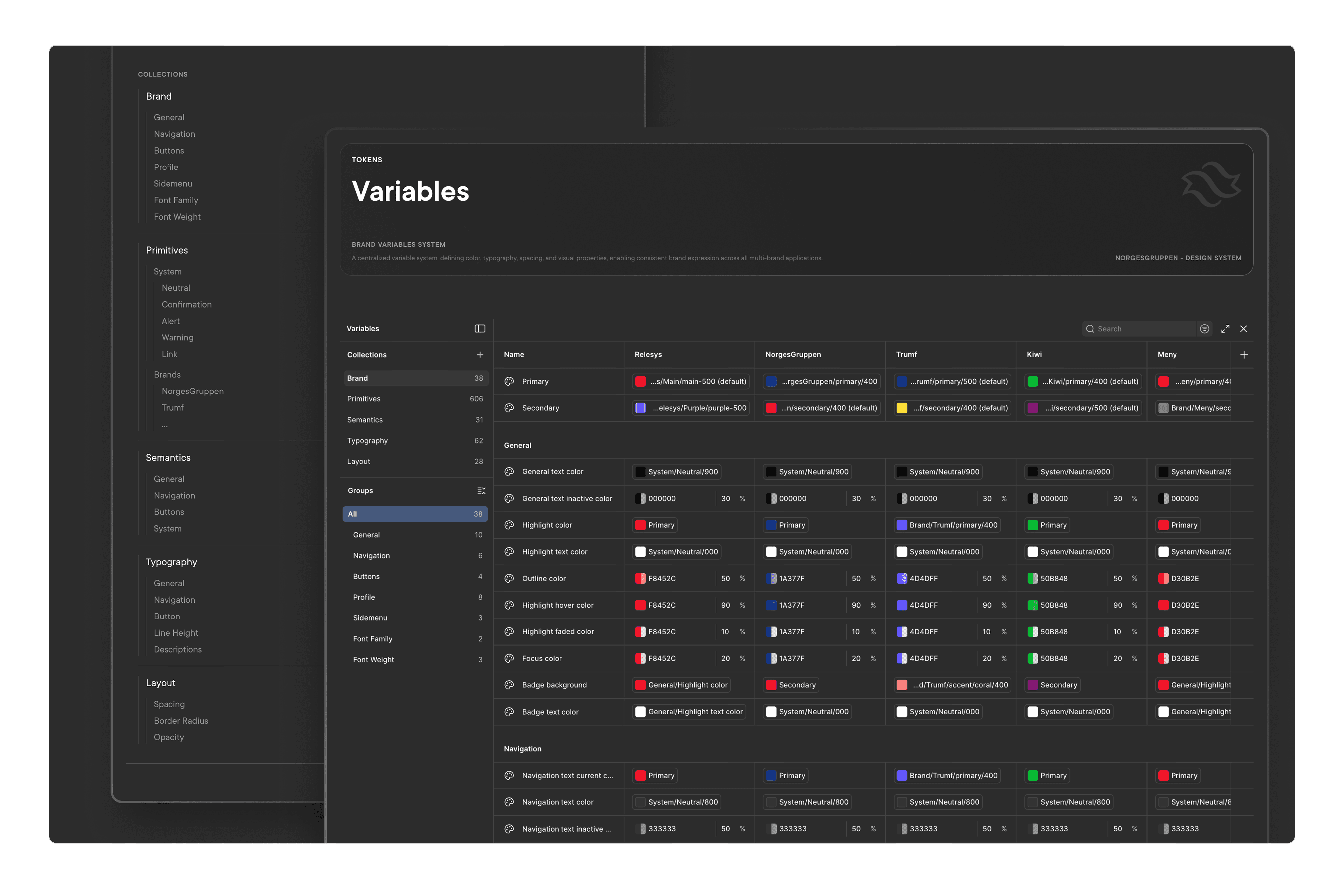
We started with the tokens, some fixed across all brands, some customizable per brand through Figma variables and modes. The idea was that switching a brand mode would update the entire system automatically, without any manual work or duplication. From there, components, modules, and pages all followed the same logic, every part designed and adapted to the token system.
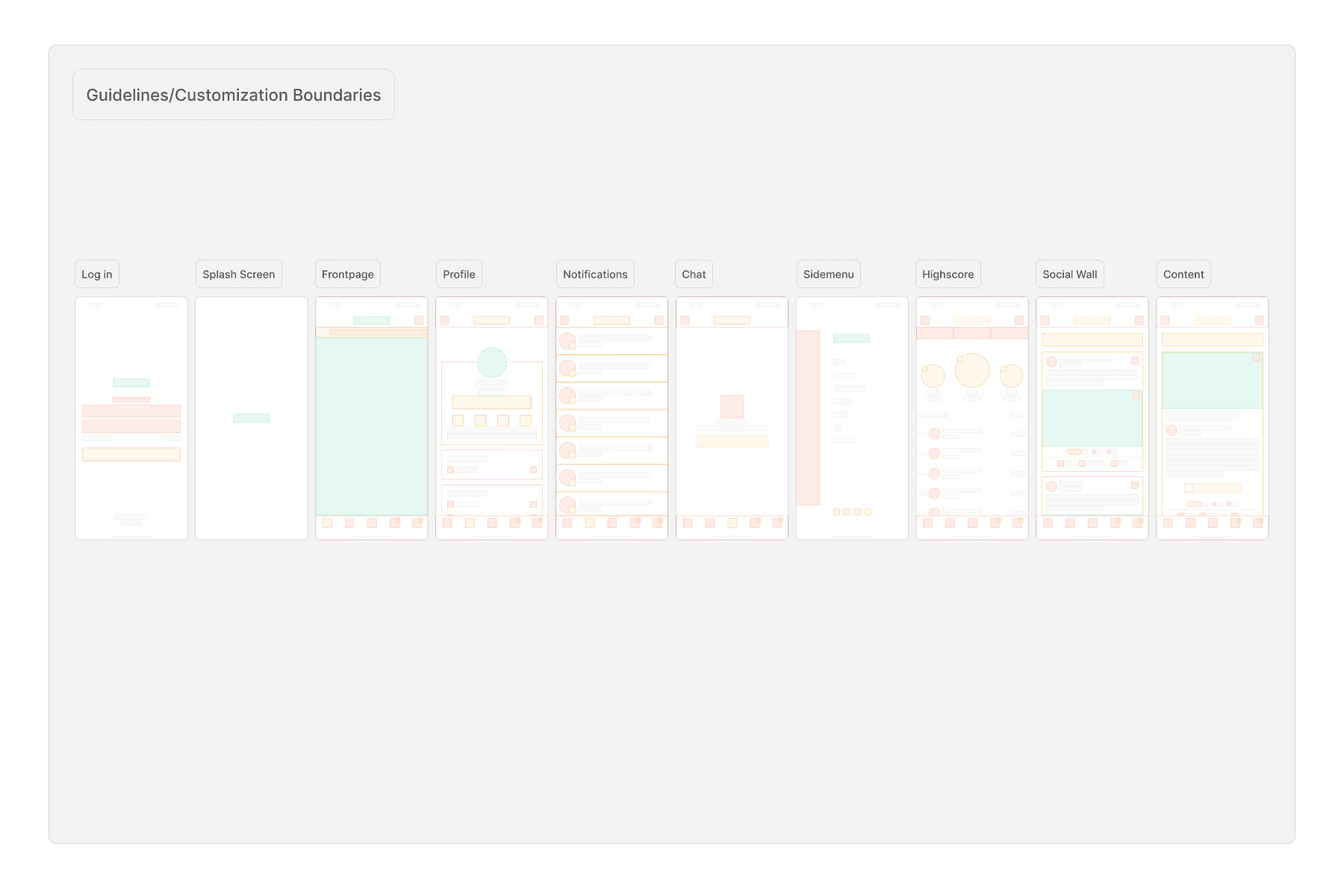
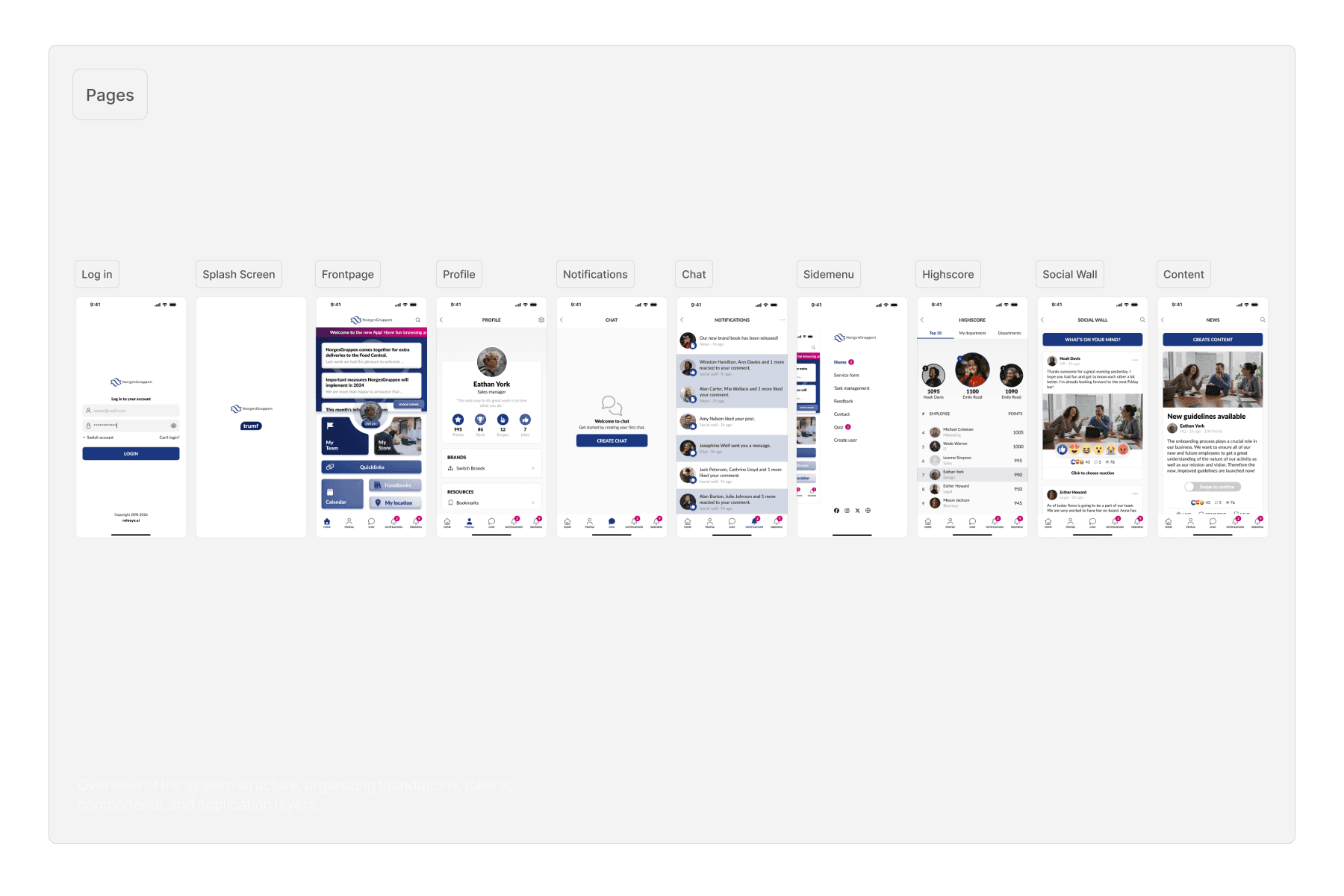
To make it easy for everyone working with the system, we created simple wireframes of every page showing exactly what each brand could and couldn't touch. Finally everything was linked into a working prototype, so the client could feel the product before anything was built.
Implementation
Translating Figma into code.
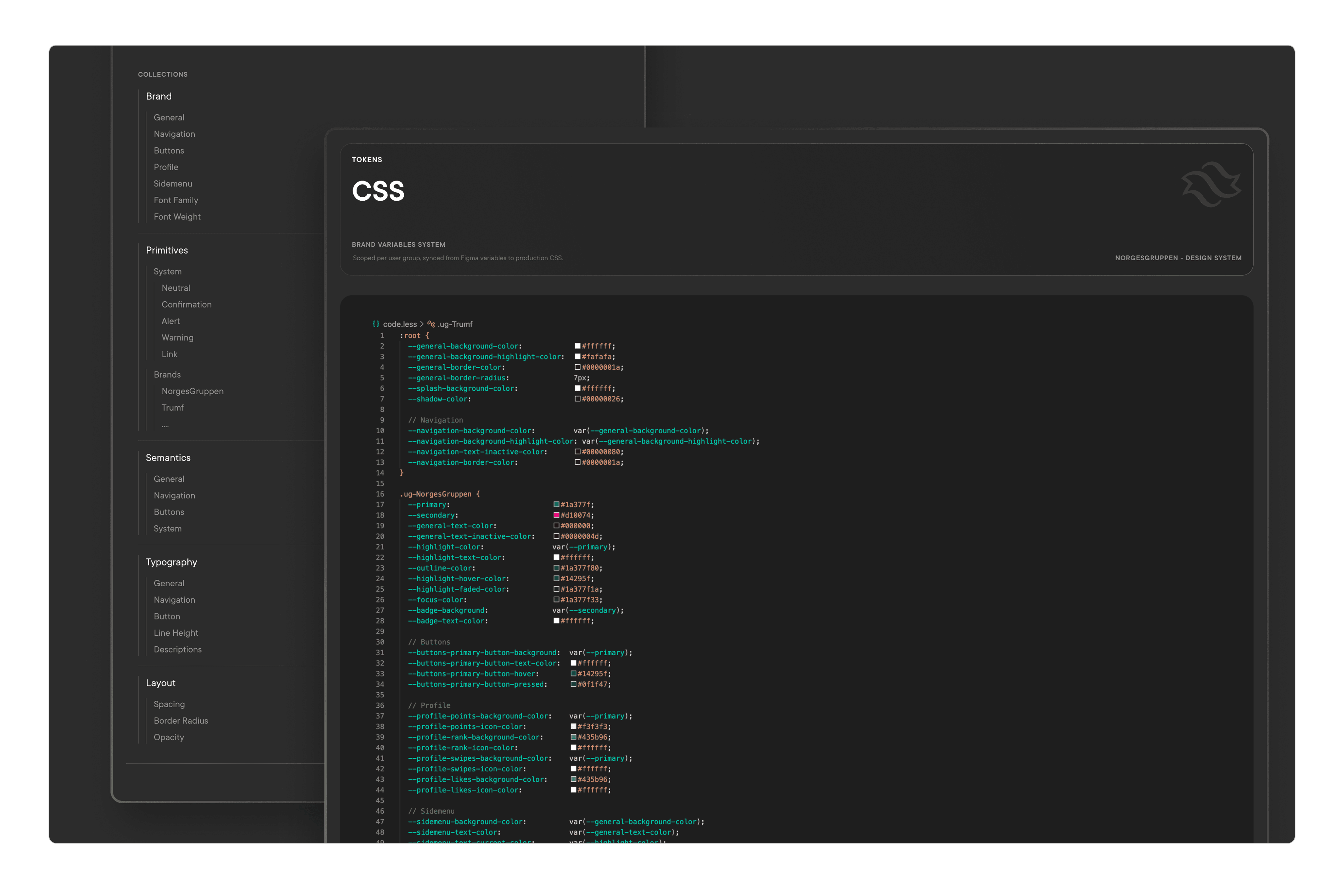
A big part of this project was making sure the design didn't stop at Figma. We built the token system so it could translate directly into CSS variables, making each app easy to implement and customize exactly as intended. From the first structural decision to the final line of code
Impact
50,000 employees. One system. Every brand intact.
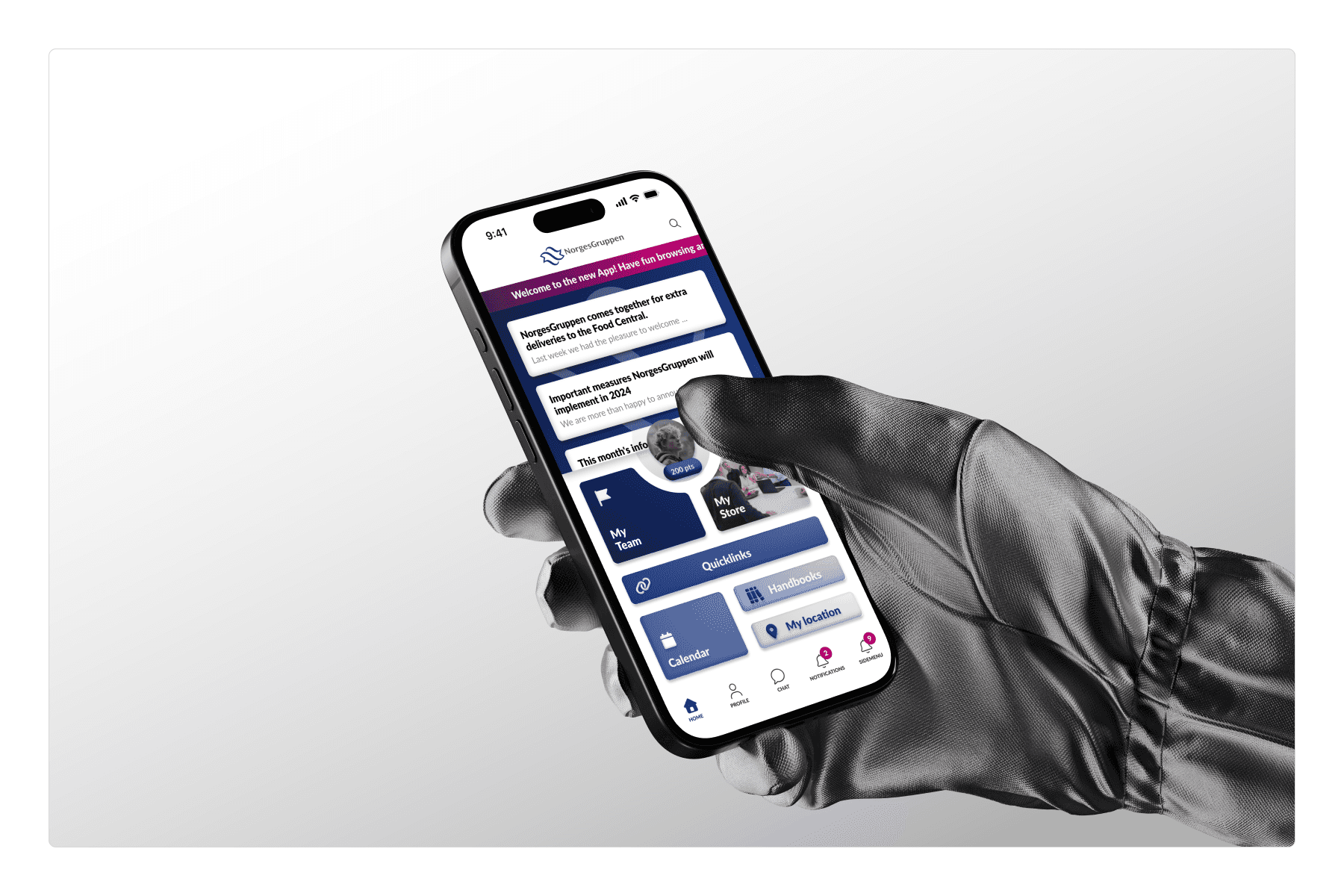
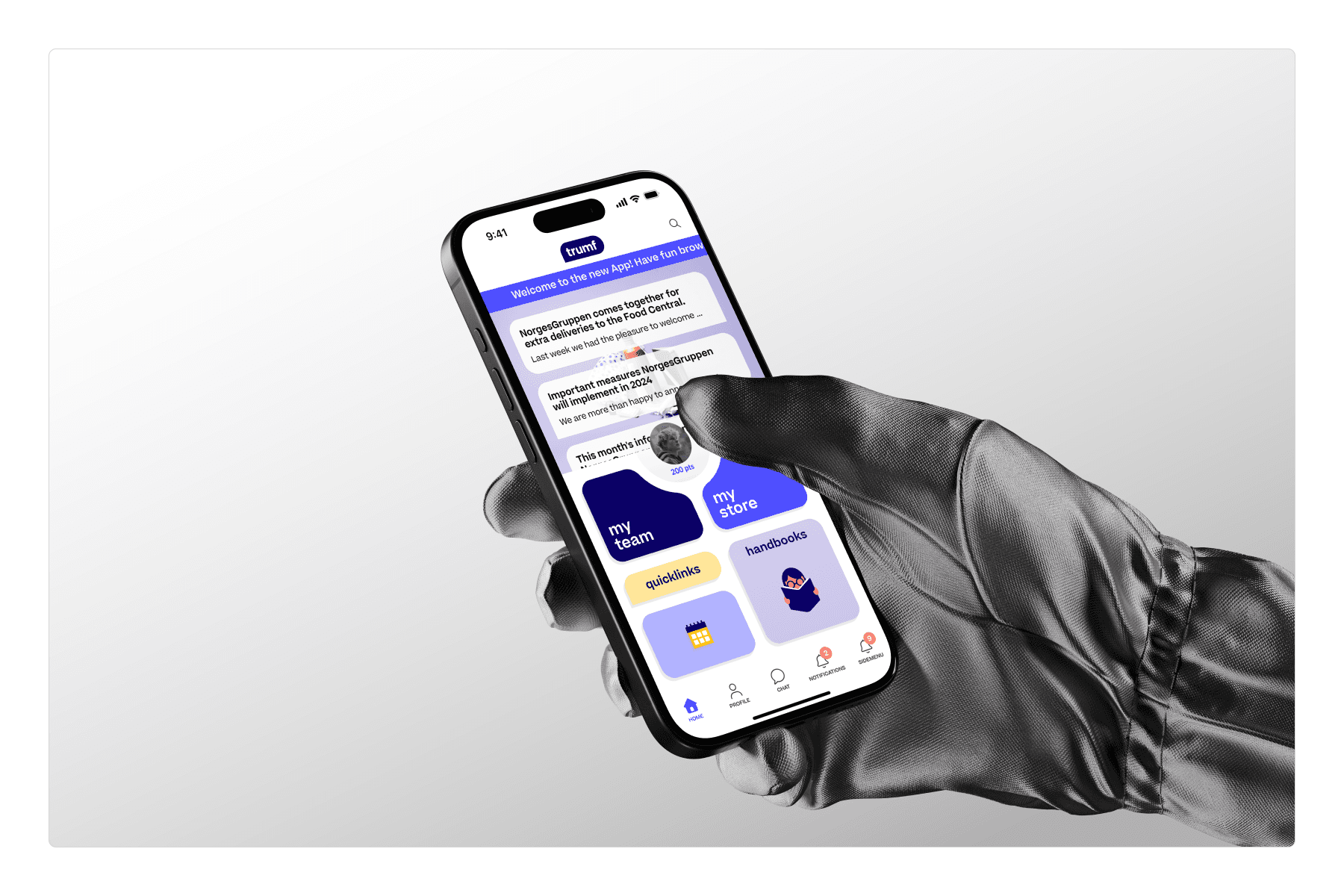
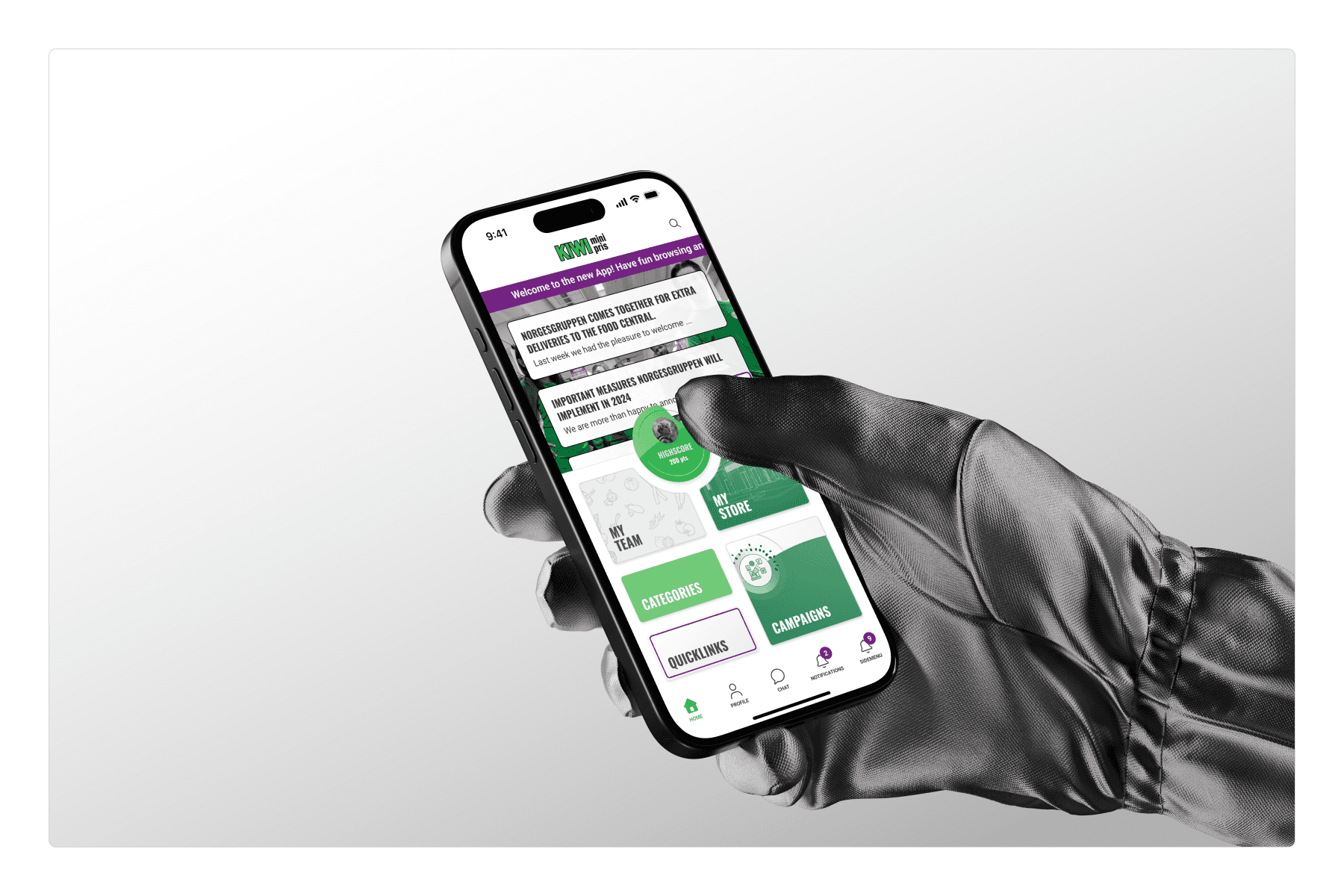
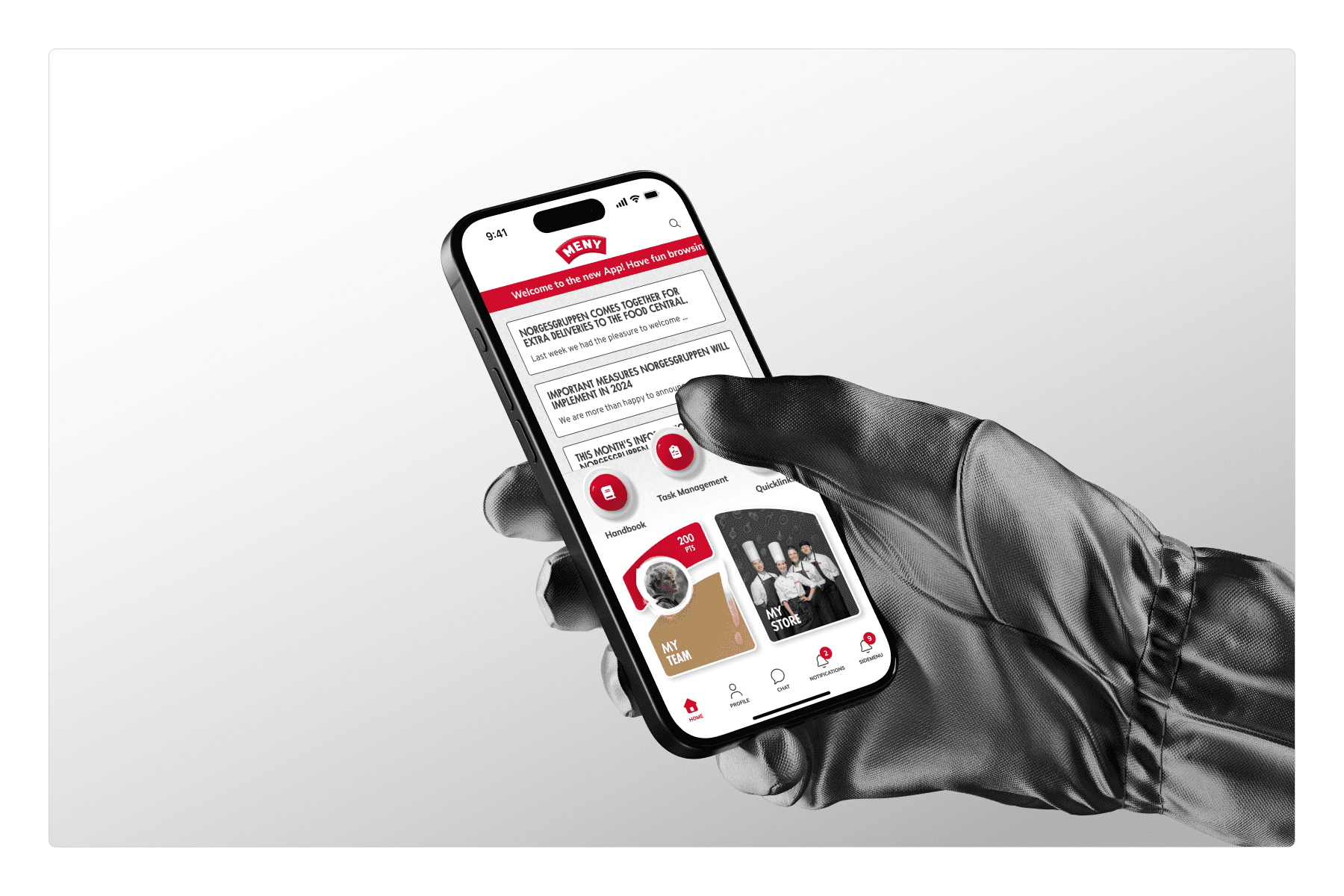
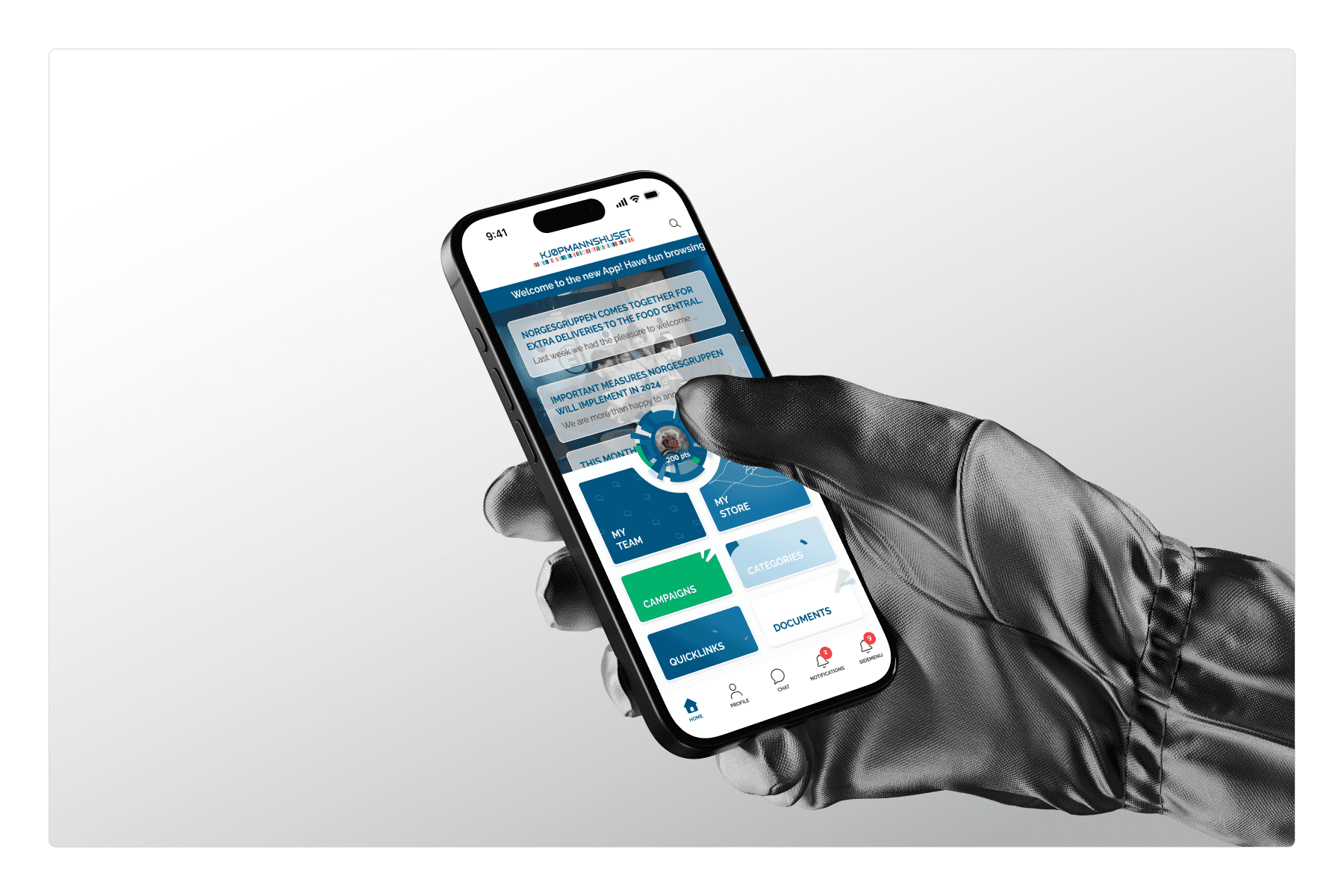
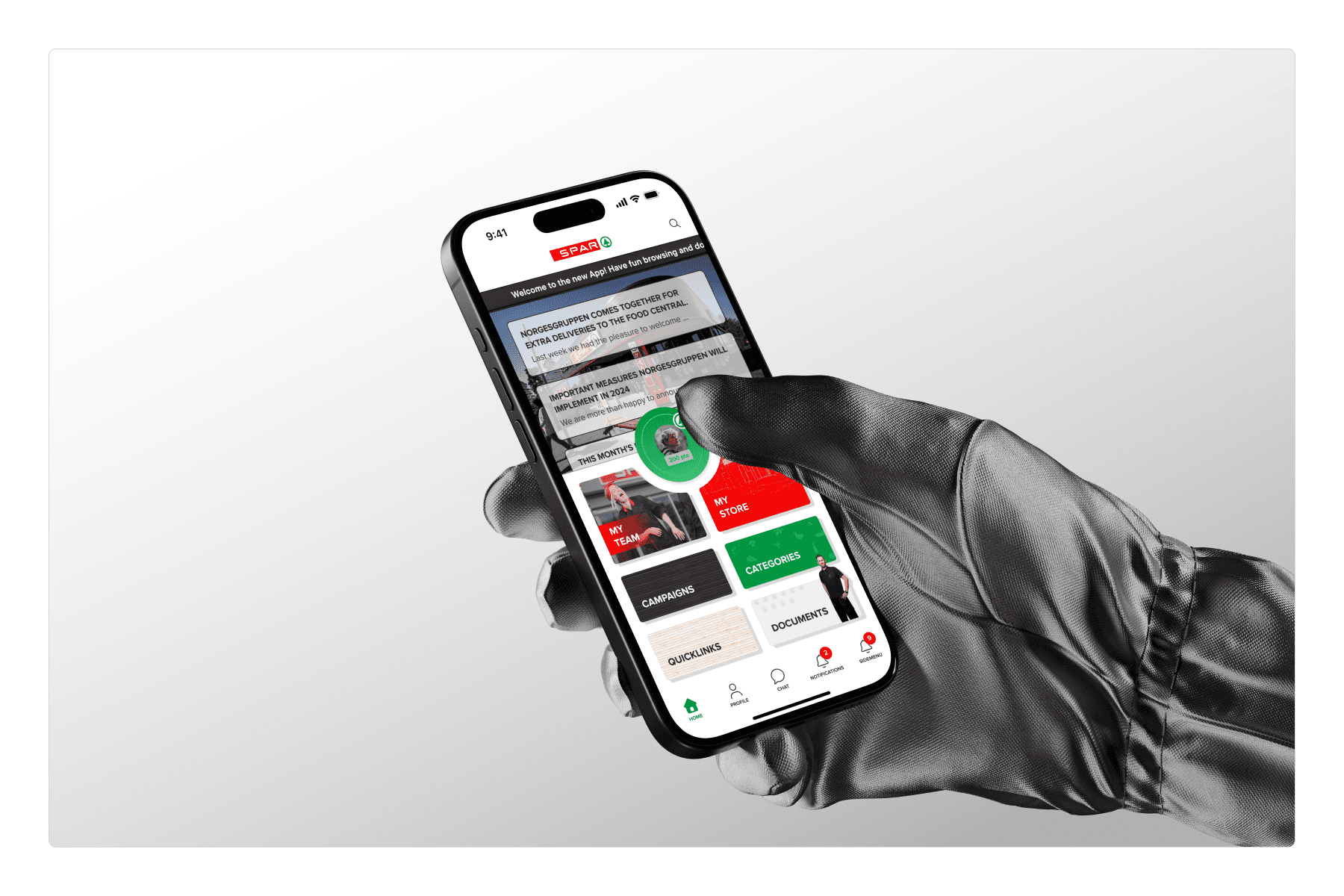
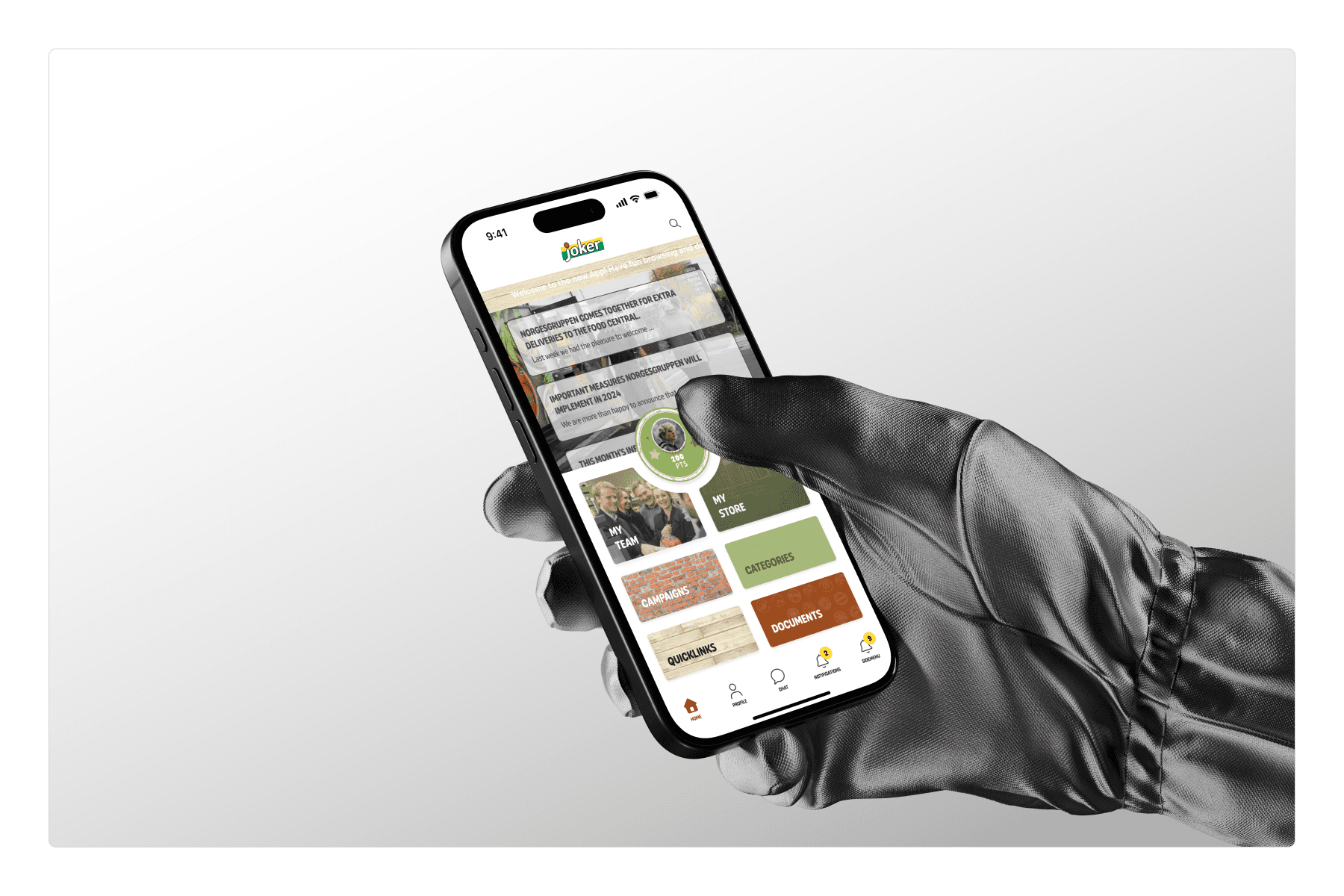
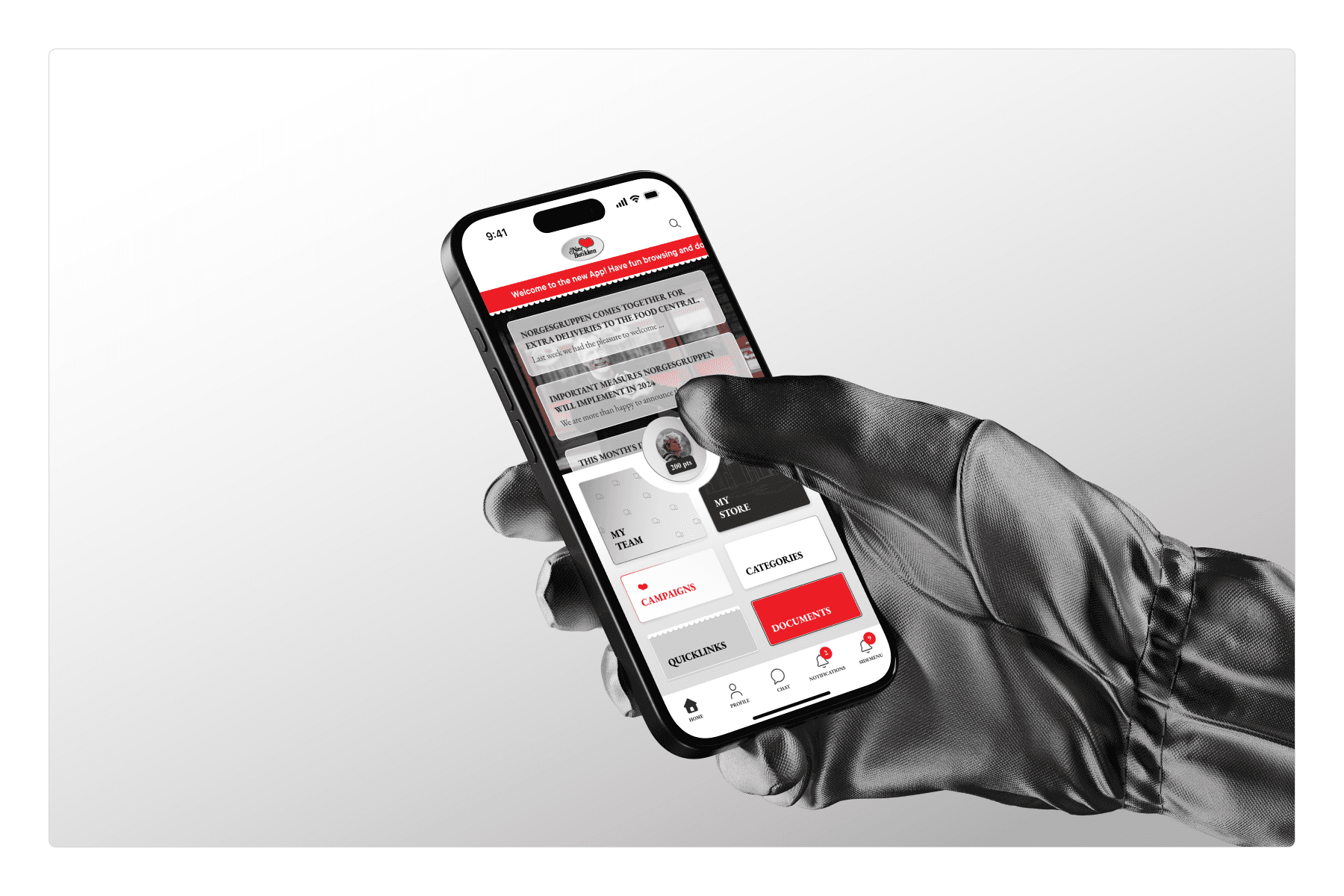
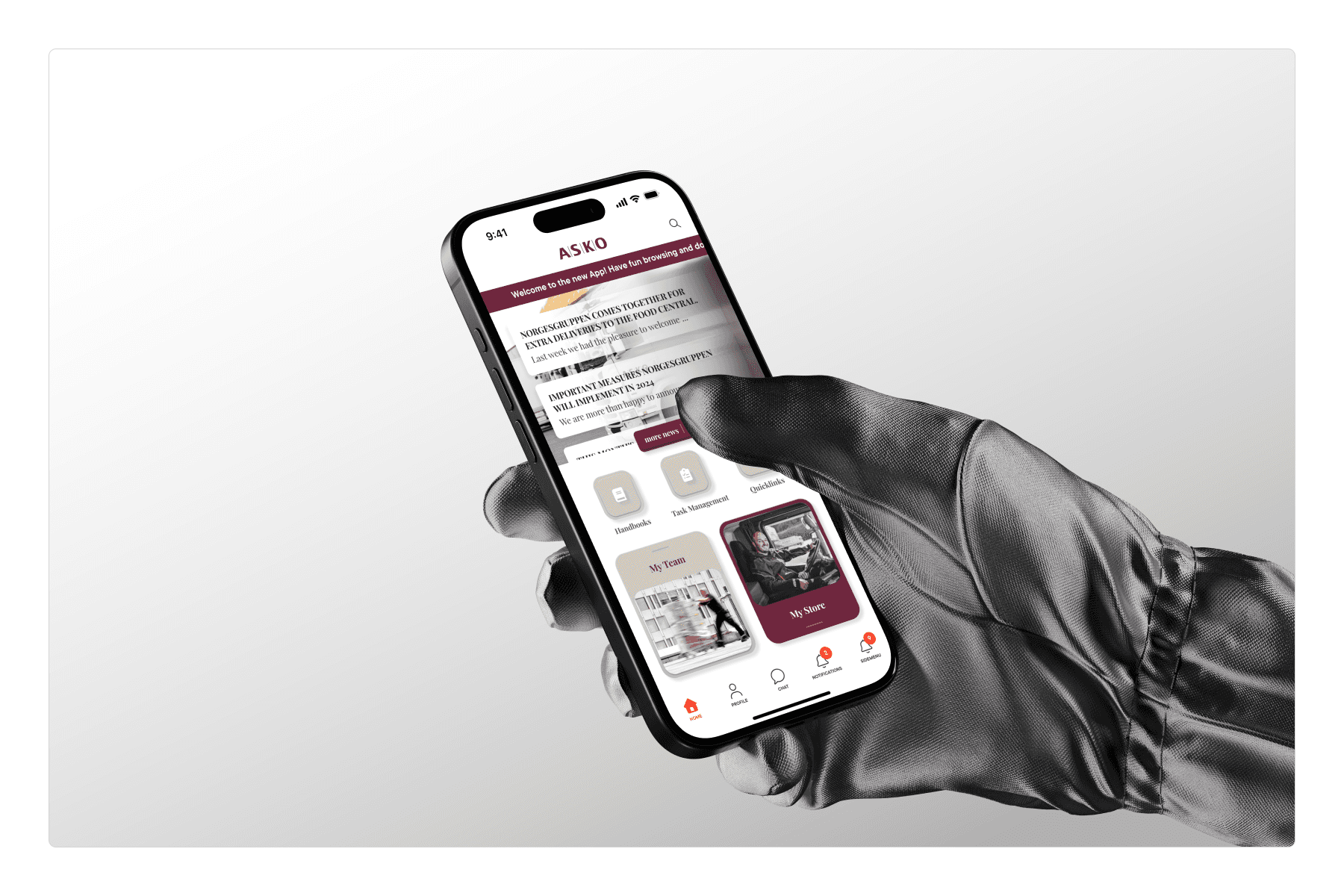
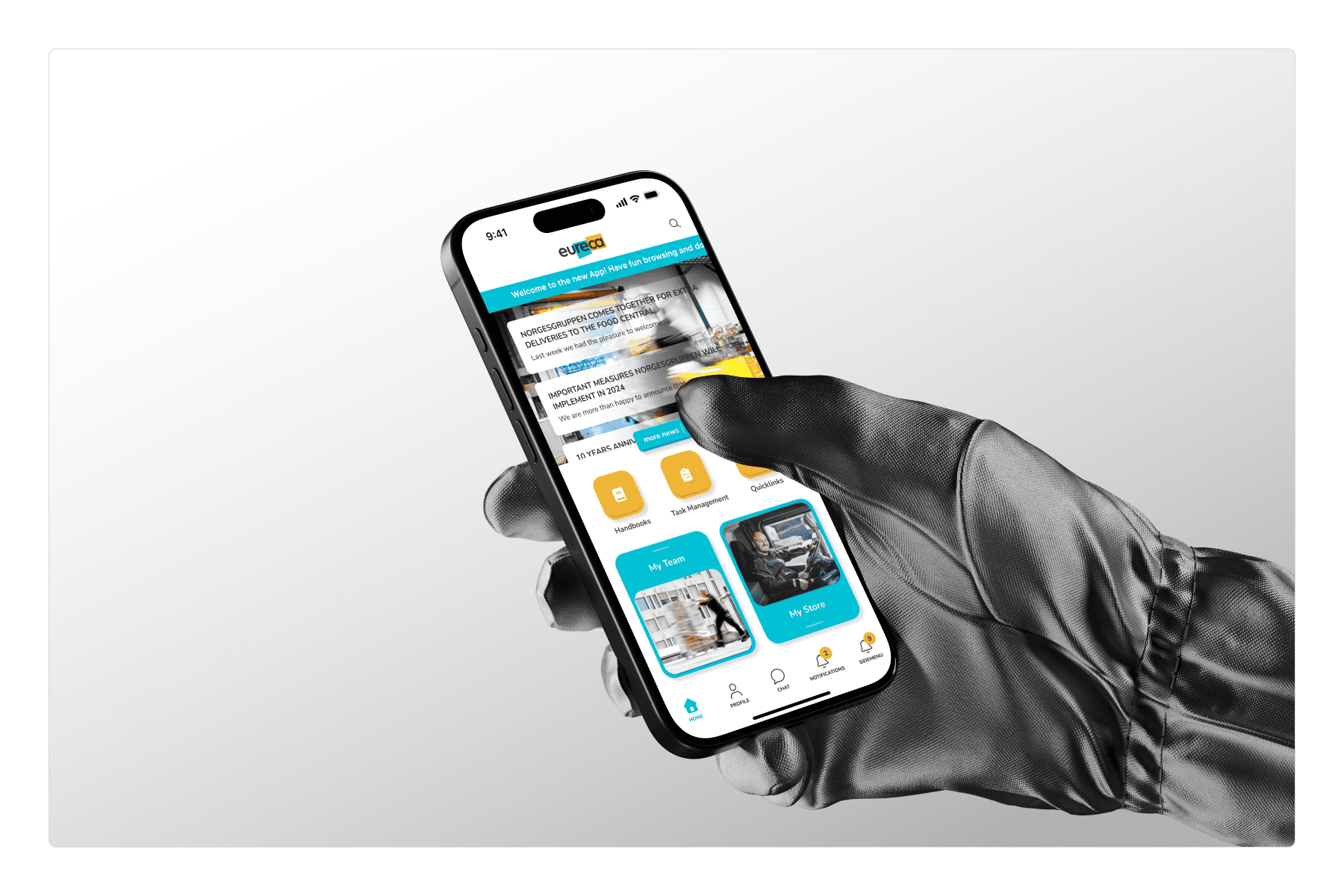
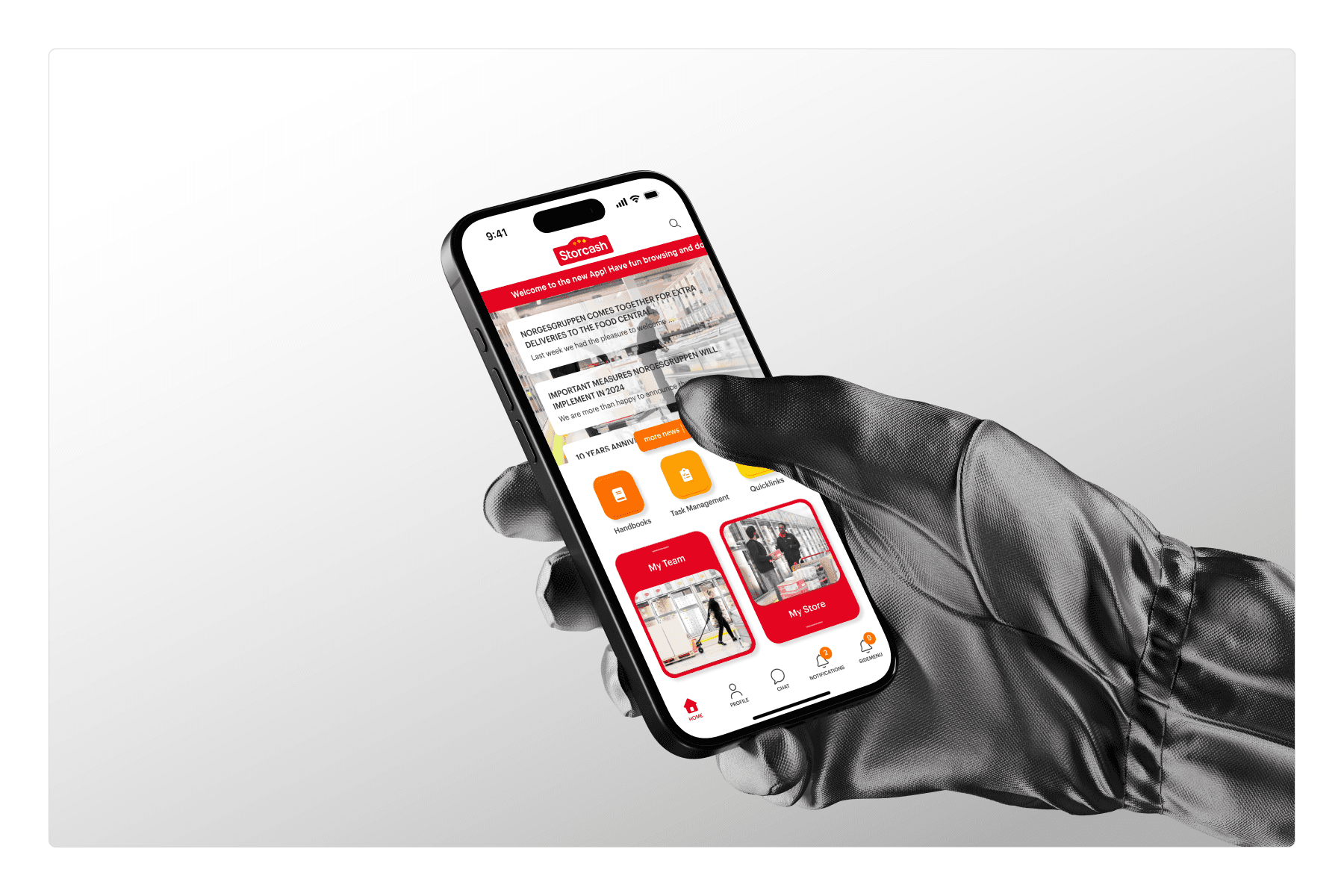
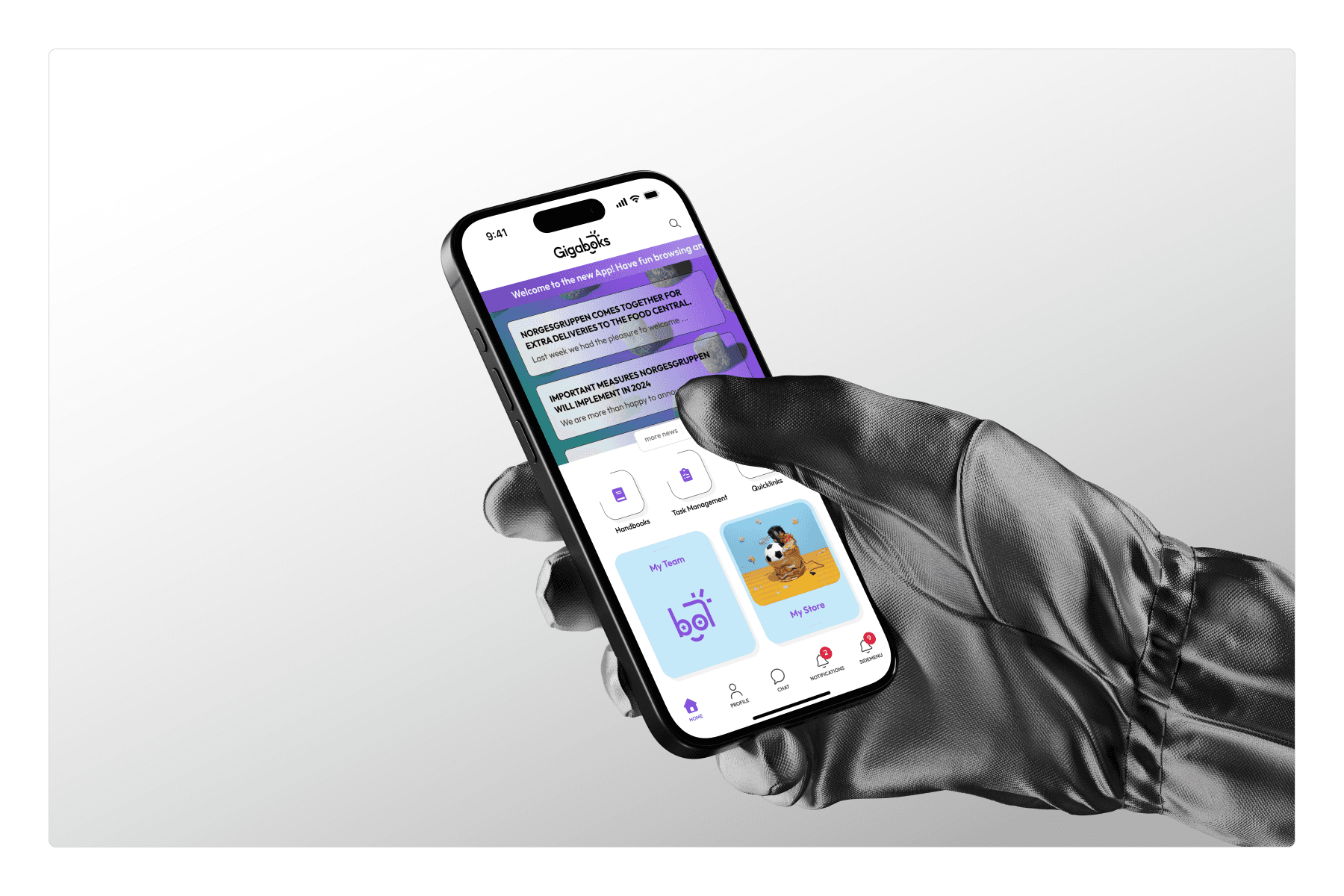
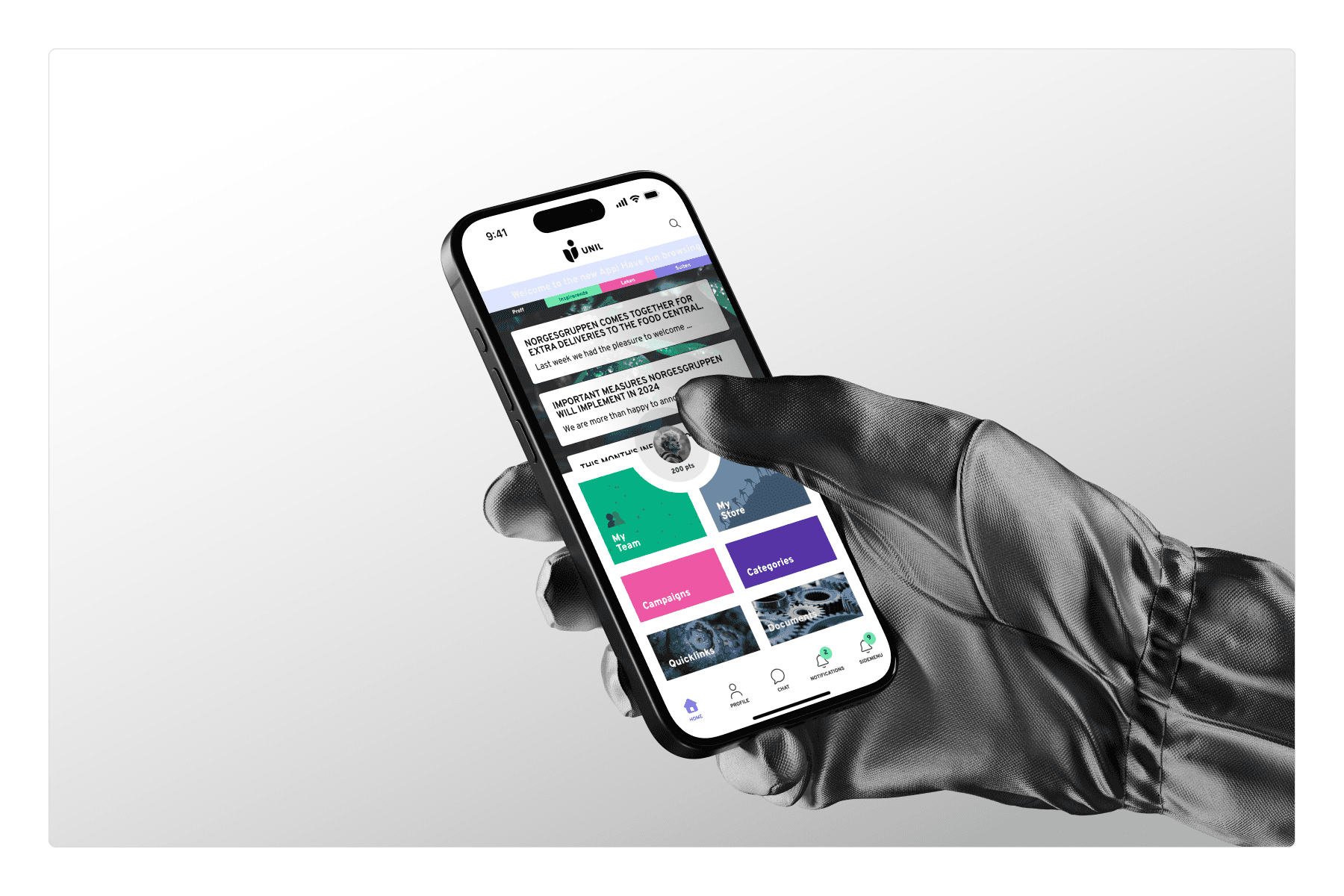
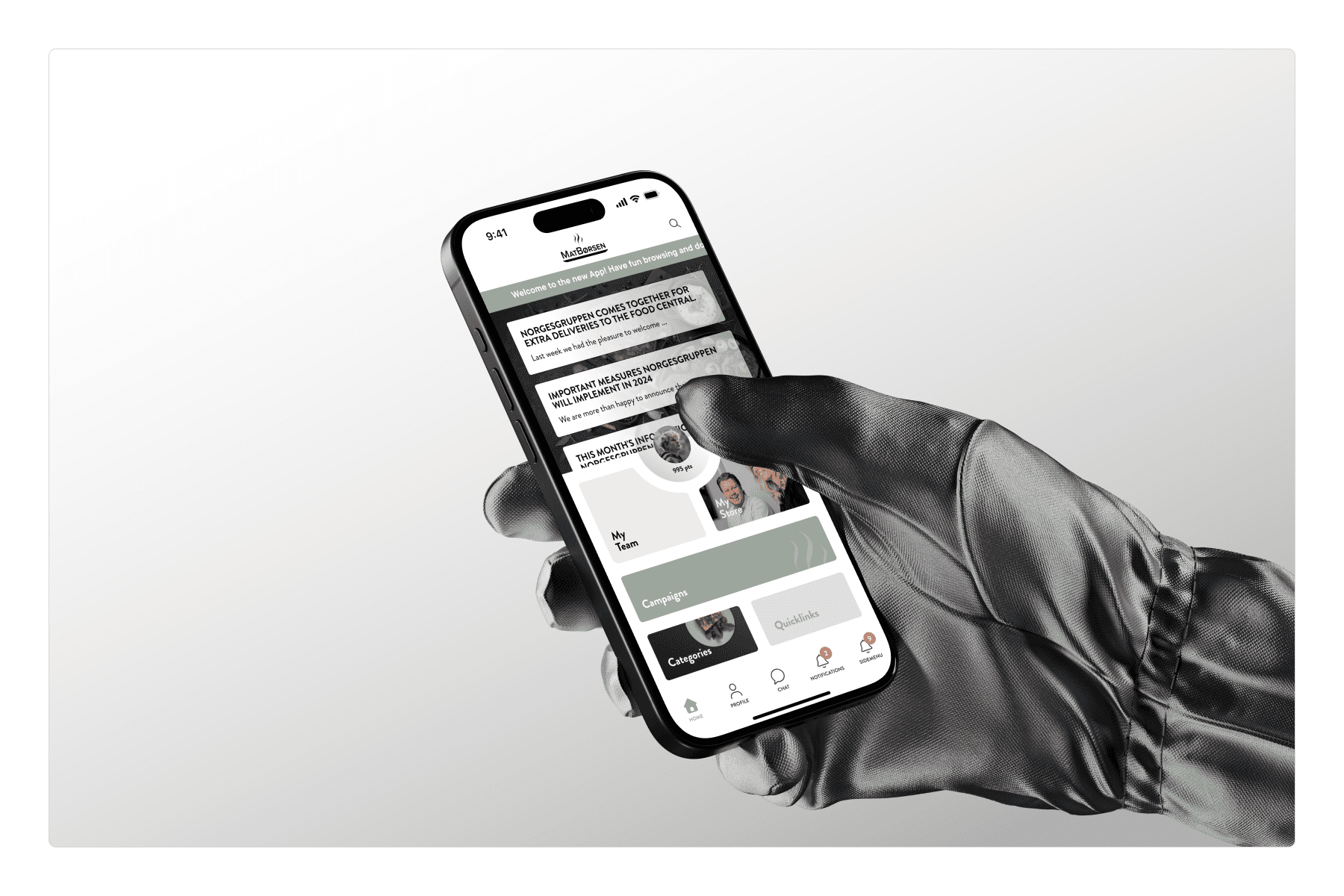
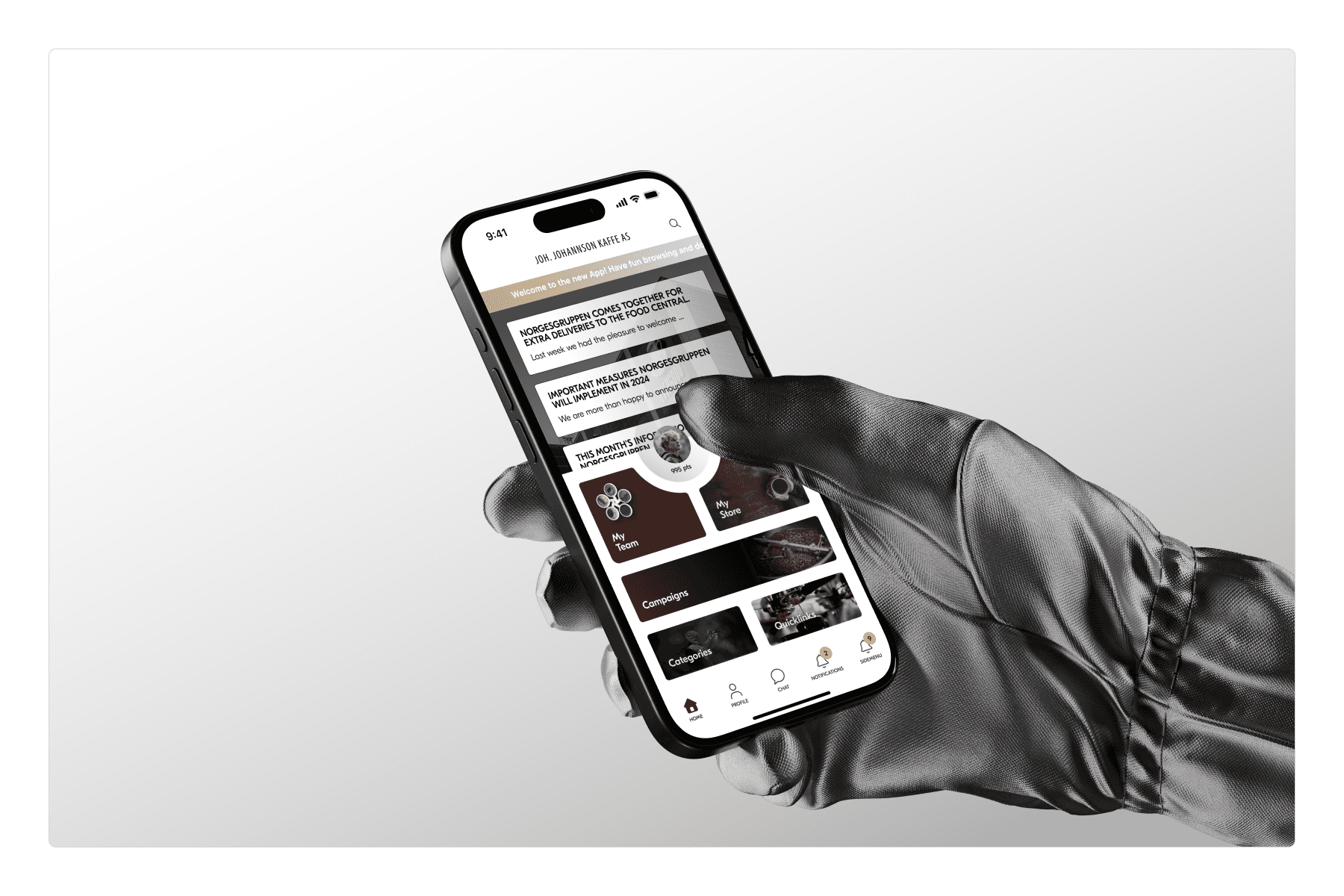
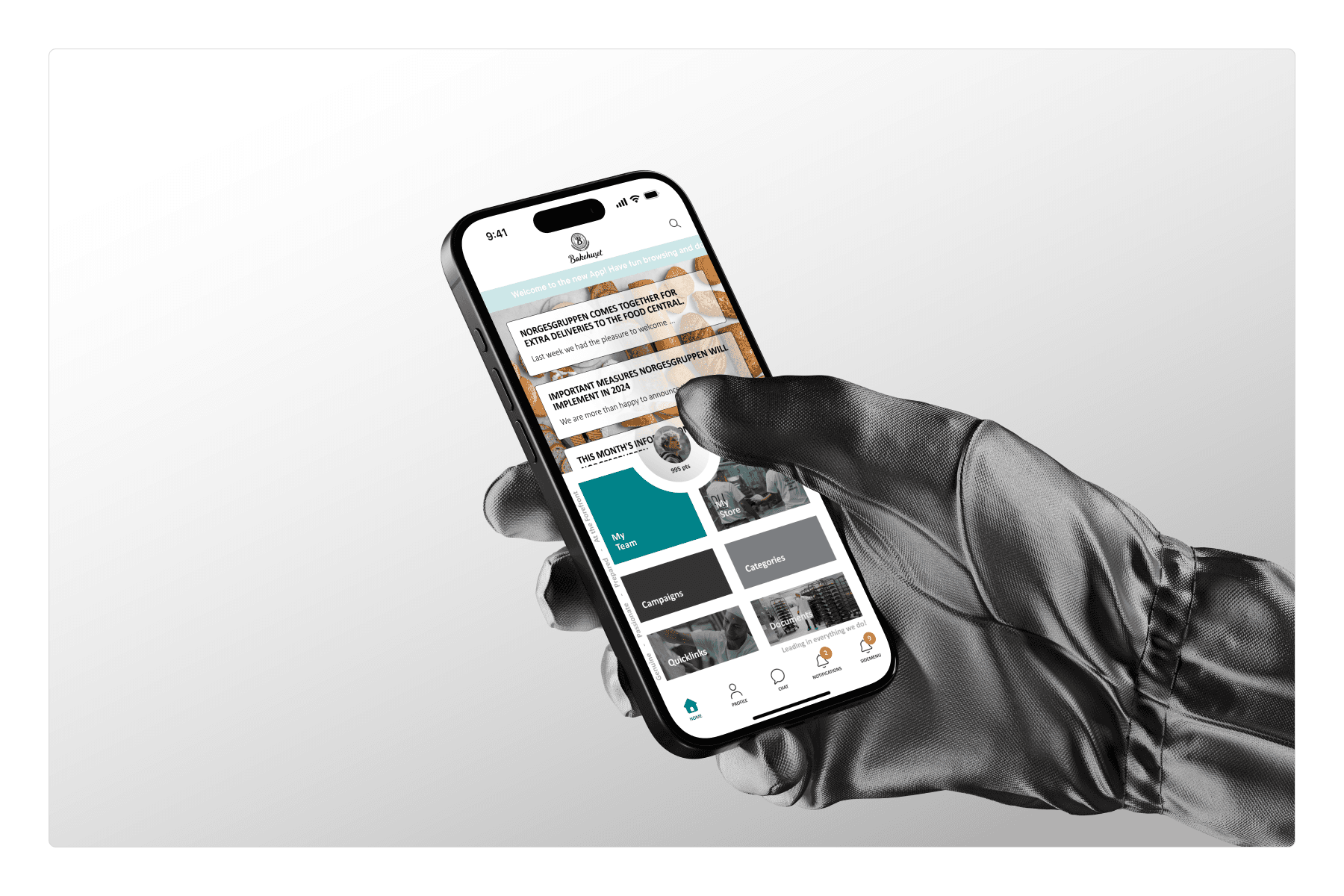
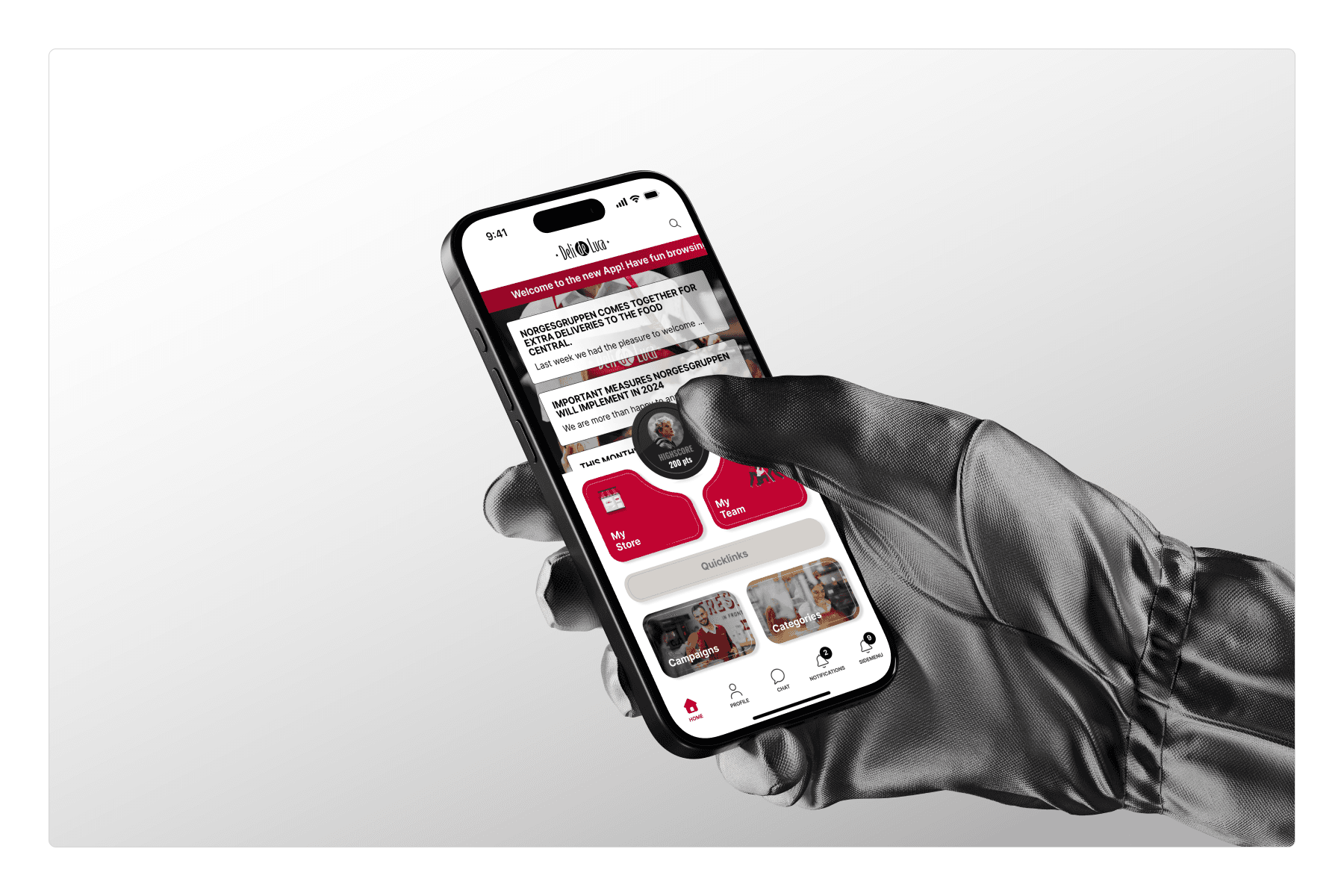
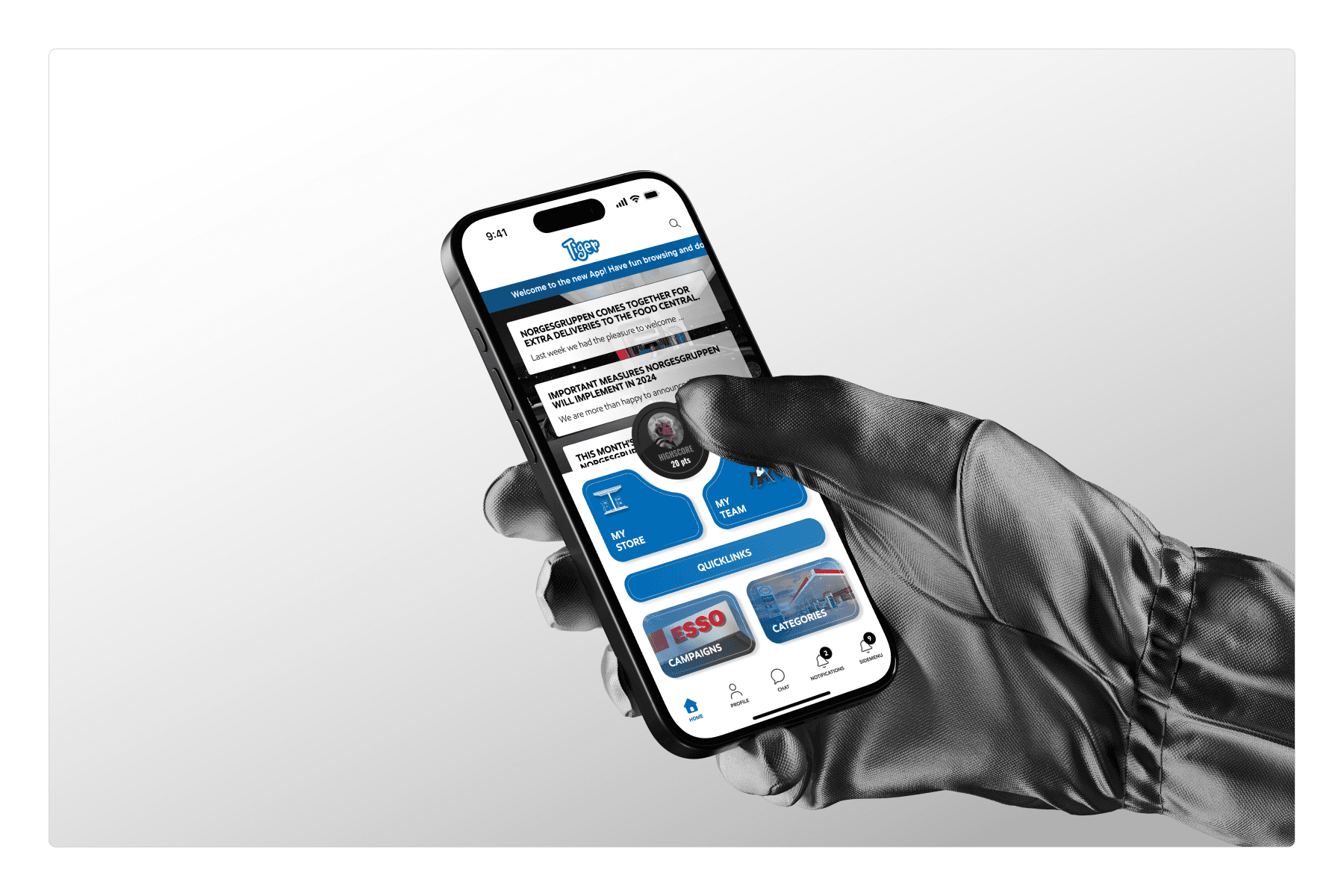
For the first time, NorgesGruppen could reach every one of their employees across all 18 brands through a single unified platform. HQ could push important communication directly into the hands of each employee, while the employees still felt like they belonged to their own brand.
Beyond the system itself, each brand received a fully customized front page designed and presented to them individually, so every client had an app they could truly call their own.
The system didn't erase what made each brand distinct. It connected them.
Reflection
Knowing when to hold the line and when to adapt.
Looking back, the hardest part wasn't the architecture it was finding the right balance between client needs and product capabilities. Clients had requests, teams had opinions, and the challenge was knowing when to hold the boundaries and when to flex. Doing enough without doing too much. Moving fast enough without moving too soon.
Even with a well structured system from the start, there were things that pushed beyond my capabilitie, customization requests that stretched the boundaries of what the system could absorb. And that's okay. Every project teaches you something the next one will be better for.
"Unity in variety is the deepest law of the universe." — Ralph Waldo Emerson
Want to see the system in action? Don't forget to explore the prototype
Newer